
Views: 222 Author: Loretta Publish Time: 2026-02-10 Origin: Site


Content Menu
● What Is a Lifeguard Swimsuit?
● Lifeguard Swimsuits vs Regular Swimwear
>> Lifeguard Swimsuit vs Regular Swimwear
● Core Lifeguard Swimsuit Styles
>> One-Piece Lifeguard Swimsuits
>> Two-Piece Lifeguard Swimsuits (Bikini-Style)
● The Best Fabrics for Lifeguard Swimsuits
>> Why Polyester and PBT Lead the Industry
● Essential Lifeguard Swimsuit Buying Checklist
>> 1. Confirm Employer and Program Requirements
>> 2. Prioritize Fit and Comfort
>> 3. Match Suit Style to Environment
>> 4. Evaluate Durability and Care Requirements
● Practical Fit and Sizing Tips for Female Lifeguards
● Lifeguard Swimsuit Care: Make Your Suit Last Longer
● Common Mistakes to Avoid When Choosing Lifeguard Swimsuits
● When to Replace a Lifeguard Swimsuit
● Why Professional Buyers Choose OEM Lifeguard Swimsuit Manufacturers
● Clear Actions for Lifeguards, Coaches, and Buyers
● Ready to Develop or Upgrade Your Lifeguard Swimsuit Line?
>> 1. What color should a lifeguard swimsuit be?
>> 2. Are two-piece lifeguard swimsuits professional enough?
>> 3. Which fabric lasts longest in chlorine?
>> 4. How tight should a lifeguard swimsuit be?
>> 5. How many lifeguard swimsuits should a guard own?
Lifeguard swimsuits are more than just red one-pieces or bikinis – they are technical safety gear designed to support long shifts in sun, chlorine and surf while allowing fast, unrestricted movement during rescues. Choosing the right lifeguard swimsuit means balancing performance, durability, comfort, and employer uniform rules so guards can stay focused on what matters most: swimmer safety.
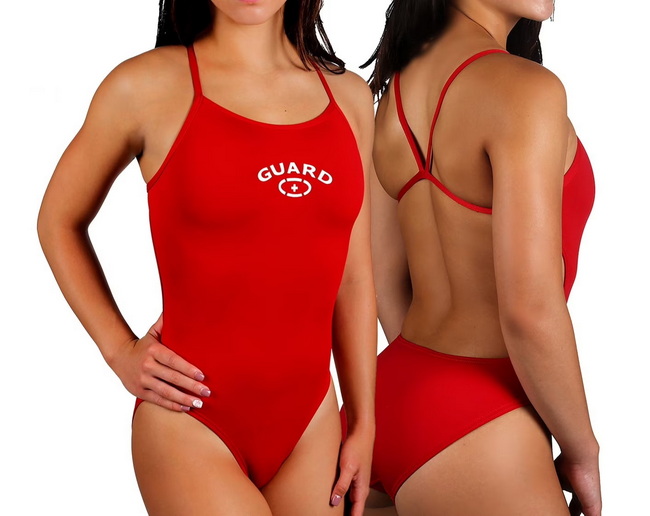
A lifeguard swimsuit is performance swimwear specifically designed for professional lifeguards who must move quickly, rescue confidently, and work long hours in challenging aquatic environments. Compared with regular fashion swimwear, lifeguard suits emphasize secure fit, coverage, and chlorine-resistant fabrics over trends or decorative details.
Key characteristics include:
- High durability in sun, salt, and chlorinated water.
- Secure fit that does not ride up, slip, or loosen during entries and rescues.
- Functional coverage appropriate for professional work and agency dress codes.
- Clear identification with visible “GUARD” or “LIFEGUARD” logos when required by employers.
Though they can look similar, lifeguard swimsuits and regular swimwear are built for very different purposes.
How lifeguard swimsuits differ from regular swimwear:
- Function over fashion: Lifeguard suits prioritize compression, security, and freedom of movement, while regular suits often focus on style or trends.
- Stronger fabrics: Professional suits rely heavily on polyester-based fabrics that resist chlorine, UV, and stretching far better than typical nylon blends.
- Professional coverage: One-piece and athletic two-piece designs offer work-appropriate coverage that stays in place during deep-water entries and rescues.
- Uniform compliance: Many aquatic programs require specific colors (often red with yellow or white print) and official patches or logos, which fashion swimwear usually lacks.
Feature | Lifeguard Swimsuit | Regular Swimwear |
Primary purpose | Professional safety, rescues, training | Leisure, vacation, casual swimming |
Typical fabric | High-quality polyester, PBT performance blends | Nylon, spandex, fashion polyester |
Fit | Snug, compressive, secure | Varies widely; often looser or decorative |
Coverage | Athletic, work-appropriate | Ranges from minimal to full coverage |
Logos / markings | “GUARD”/“LIFEGUARD”, agency patches | Usually brand logo only |
Expected lifespan | Long-term, heavy use in harsh conditions | Seasonal, moderate use |
Lifeguard programs typically standardize around three main styles: one-piece suits, athletic two-piece bikinis, and rash guards or tops used for sun and surf protection.
One-piece lifeguard swimsuits are the most common choice for women and junior guards in many municipalities and swim programs.
- Coverage and professionalism: One-pieces offer modest, consistent coverage that satisfies most uniform policies and helps guards feel confident on stand, deck, and in rescues.
- Secure performance: A compressive, snug fit reduces drag and prevents fabric shifting during dives, flips, or carries.
- Comfort for long shifts: Modern polyester and PBT fabrics stay light in water and dry relatively quickly, which matters when guards rotate between water and deck all day.
Common back styles include:
- Fixed-back (non-adjustable) straps for a streamlined feel and fewer pressure points.
- Thin or “training” straps for advanced swimmers who prioritize range of motion.
Performance two-piece lifeguard swimsuits are not fashion bikinis – they are athletic sets designed for training, surf, and rescue work.
Benefits:
- Fit flexibility: Different top and bottom sizes allow a better match for diverse body shapes.
- Cooling and mobility: Less fabric can feel cooler in hot climates and offers maximum range of motion during repetitive drills.
- Quick changes: Easier to swap a wet piece or layer under shorts and tops.
Key closure styles:
- Fixed-back tops: Provide consistent support with no laces to re-tie, ideal for guards who prefer a “set and forget” fit.
- Tie-back tops: Offer adjustable tension; guards can tighten for surf or drills and loosen slightly for tower time.
- Drawstring bottoms: Inner drawcords add extra security in waves, slides, or high-impact entries.
Note: Some agencies restrict or must pre-approve two-piece suits, especially for junior programs.
Rash guards and UV tops are essential add-ons for sun safety and branding.
- Sun protection: Long-sleeve rash guards with UPF 50+ reduce UV exposure during multi-hour shifts.
- Visibility: Bright yellow or red shirts with “LIFEGUARD” markings increase guard visibility from a distance.
- Layering: Worn over one-piece or two-piece suits in surf, open water, or windy conditions.
Fabric choice directly impacts how long a lifeguard swimsuit lasts and how it performs after hundreds of hours in treated pools or saltwater.
- Polyester: Widely regarded as the best base fabric for chlorine-resistant swimwear thanks to its strength, colorfastness, and resistance to bagging out.
- PBT (polybutylene terephthalate): An advanced polyester fiber with superior chlorine and UV resistance that keeps its shape even after heavy training.
High-performance fabrics such as endurance-style blends use polyester or PBT-rich compositions to deliver long hours of pool use without significant fading or breakdown.
Recommended fabric features for lifeguard swimsuits:
- High polyester content (often 100% or close) for maximum chlorine resistance.
- Shape retention and compression to prevent sagging and maintain a professional look.
- Quick-dry performance to reduce chafing and keep guards comfortable between water and deck.
- UPF 50+ rating for outdoor pools and beaches with strong sun exposure.
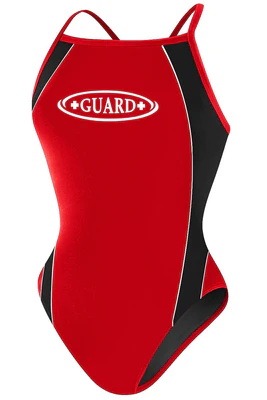
Choosing the right lifeguard swimsuit starts with a clear, practical checklist that covers policy, fit, and environment.
Before buying anything, guards should verify:
- Approved colors (often red for suits, yellow or red for tops).
- Required logos or patches such as “GUARD”, “LIFEGUARD”, or city/agency badges.
- Allowed styles – many junior programs require one-piece suits and may only approve specific two-piece designs.
- Any modesty or coverage rules for public-facing staff.
An effective lifeguard swimsuit should feel snug but not restrictive.
- Snug fit: Lifeguard suits are intentionally tighter than casual swimwear to reduce drag and prevent shifting during rescues.
- Size using measurements: Chest, waist, and hip measurements paired with a size chart deliver a more accurate fit than dress size alone.
- Check for pinch points: Straps or leg openings should not dig in, restrict breathing, or hinder arm rotation.
A helpful rule of thumb: if you can comfortably complete a full rescue drill (entry, approach, carry, and exit) without adjusting your suit, the fit is working.
Different work environments demand different performance details.
- Indoor chlorinated pools: Chlorine-resistant polyester or PBT suits are essential to avoid rapid fading and fiber breakdown.
- Outdoor pools: UV protection and colorfast fabrics help prevent sun damage and rapid color loss.
- Beaches and surf: Secure straps, drawstring bottoms, and rash guards reduce the risk of wardrobe malfunctions in strong waves.
- Waterparks: Extra security at waist and chest is important for slides and high-speed attractions.
Strong fabric is only useful if it is cared for properly.
- Look for reinforced stitching, wide elastic bands, and lined fronts for privacy and longevity.
- Rinse suits in cool, fresh water after each shift to extend life, especially in high-chlorine or saltwater environments.
- Avoid wringing or drying in direct high heat, which can prematurely age synthetic fibers.
Fit issues are one of the biggest reasons lifeguards replace suits early. A few targeted sizing strategies can dramatically improve comfort.
- Start with measurements: Use bust, waist, hip, and torso length (for one-pieces) instead of relying only on your usual clothing size.
- Understand size mapping: Many lifeguard brands convert women's numeric sizes (2, 4, 6, etc.) into XS–XL ranges, so a quick look at the brand's chart is critical.
- Decide on compression level: Guards who swim laps or train hard may prefer a slightly more compressive fit; those spending long hours on stands may want a more forgiving feel.
- Adjustable vs fixed straps: If your shoulders slope or you find straps slipping, adjustable or tie-back suits can provide a more personalized, stable fit.
Content idea: Add a small sizing-flowchart graphic (Step 1: Measure, Step 2: Check chart, Step 3: Decide compression, Step 4: Order two close sizes if unsure).
Proper care can significantly extend the working life of a lifeguard swimsuit, especially for guards who spend most days in the water.
Daily care routine:
1. Rinse immediately in cool, fresh water after each shift to remove chlorine, salt, sunscreen, and body oils.
2. Hand-wash gently with mild soap when needed; avoid harsh detergents or bleach that damage elastic fibers.
3. Squeeze, do not wring: Press water out gently to prevent stretching seams and straps.
4. Air-dry flat in the shade rather than in direct sunlight or on a hot radiator, which can fade colors and weaken fabric.
5. Rotate between two suits if you guard several days per week to allow full drying time and reduce stress on stitching.
Even experienced guards and managers can run into preventable issues when ordering uniforms.
- Choosing fashion swimwear instead of professional gear: Regular bikinis or trunks often lack the durability and security needed for rescues.
- Ignoring uniform rules: Non-compliant colors, missing logos, or unapproved styles can result in last-minute replacements and extra cost.
- Buying suits too big: Baggy suits increase drag and can shift dangerously during high-impact water entries.
- Overlooking environmental factors: The same suit may not perform equally well in heavily chlorinated indoor pools and abrasive surf environments.
Even top-quality suits have a finite service life, especially under daily use.
Signs it is time to replace a lifeguard swimsuit include:
- Faded or translucent fabric that is no longer opaque when wet.
- Loss of compression and a loose or baggy feel around the midsection, bottom, or straps.
- Pilling or thinning where the suit contacts rough surfaces like pool edges or rescue boards.
- Stretched stitching or leg openings that no longer provide a secure seal.
Guards who work multiple long shifts per week should plan for regular annual or semi-annual replacements, depending on use intensity and water conditions.
For aquatic chains, resorts, schools, and brands, working directly with a specialized OEM lifeguard swimwear manufacturer offers several advantages over off-the-rack retail suits.
- Consistent quality and sizing: Custom-developed patterns and tested fabrics deliver predictable fit across large teams.
- Branding and customization: OEM partners can add logos, colorblocking, and wording (“LIFEGUARD”, “STAFF”, program names) across one-piece and two-piece lines.
- Bulk pricing and continuity: Once a design is approved, organizations can reorder the same model season after season, simplifying uniform management.
- Environment-matched fabrics: Manufacturers can recommend specific polyester or PBT blends optimized for your pool chemistry and climate.
For international buyers, OEM factories in established swimwear hubs can also support private label lifeguard collections, matching strict quality expectations with flexible minimum order quantities.
Whether you are an individual guard, a coach, or a procurement manager, you can follow a simple action plan to get the right suits in place.
For individual lifeguards:
1. Confirm your employer's color, logo, and style rules.
2. Measure your body and review the size chart carefully.
3. Choose a chlorine-resistant polyester or PBT-rich suit for your main work environment.
4. Test the suit in real training: swim, dive, and simulate a rescue before committing for the full season.
For program directors and buyers:
1. Define your uniform policy: colors, acceptable styles, logo placement, and coverage level.
2. Decide on main use environments (indoor, outdoor, surf, waterpark) and required fabric performance.
3. Partner with a specialized lifeguard swimsuit OEM to create standard-issue suits and training options.
4. Establish a replacement schedule and care guidelines to ensure guards stay in safe, professional-looking gear.
If you are planning to launch or refresh a lifeguard swimwear collection for your brand, resort, school, or aquatic chain, working with a dedicated OEM manufacturer can dramatically simplify the process.
As a professional swimwear factory in China, Yongting can support:
- OEM lifeguard swimsuit production in one-piece and secure two-piece styles using chlorine-resistant polyester and performance blends.
- Custom branding with your lifeguard logos, program names, and color requirements.
- Bulk production and quality control tailored to pool, beach, or waterpark environments.
For swimwear brands, distributors, and facility managers who want reliable, long-term lifeguard uniform solutions, now is the time to plan your next season's collection. Contact Yongting's team today to discuss fabrics, patterns, and bulk pricing, and start building a lifeguard swimsuit line that keeps your guards safe, professional, and ready to respond.
Contact us to get more information!
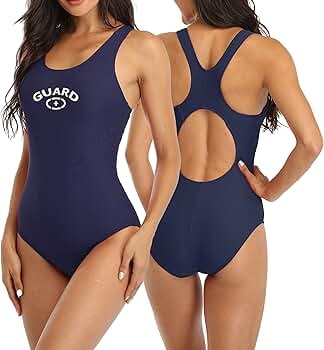
Many agencies choose red for swimsuits and yellow or red for tops, often with a visible “LIFEGUARD” or “GUARD” print for easy recognition. Always check your program's uniform policy before purchasing.
Performance two-piece lifeguard suits with secure straps and drawstring bottoms can be professional and functional, but some junior and public programs only approve one-piece suits. Confirm with your employer before wearing a two-piece on duty.
High-quality polyester and PBT-rich fabrics consistently outperform nylon and basic elastane in chlorinated environments, maintaining color and compression much longer. Look for suits marketed as “chlorine resistant” or “training” lines.
Lifeguard suits are designed to fit slightly tighter than fashion swimwear to prevent drag and shifting during rescues. You should be able to breathe and move freely, but the suit should not gap or feel loose when you jump or dive.
Guards working multiple shifts per week often keep at least two suits in rotation, allowing one to fully dry while the other is in use. This rotation reduces wear and helps each suit last longer.
1. https://thelifeguardstore.com/blog/post/choosing-the-right-swimwear-for-lifeguard-duty.html
2. https://thelifeguardstore.com/blog/post/swimsuit-buying-guide-lifeguards.html
3. https://thelifeguardstore.com/lifeguard-swimwear.html
4. https://www.originalwatermen.com/blog/5-tips-buying-lifeguard-swimsuits/
5. https://www.originalwatermen.com/blog/what-is-the-best-fabric-for-chlorine-resistant-swimwear/
6. https://www.originalwatermen.com/blog/the-lifeguard-bikini-swimsuit-guide/
7. https://www.originalwatermen.com/blog/approved-lifeguard-swimwear-swimsuits/
8. https://www.originalwatermen.com/blog/womens-lifeguard-swimsuit-sizes-find-the-perfect-fit/
9. https://www.nessswimwear.co.uk/blog/post/chlorine-resistant-swimwear-fabric-guide.html
10. https://swimzip.com/pages/guide-to-swimwear-fabrics
11. https://www.sandiego.gov/lifeguards/junior/uniforms
12. https://www.ilsf.org/wp-content/uploads/2019/01/LPS-05-2006-Uniforms.pdf
13. https://jolyn.com/blogs/jolyn-clothing/the-essential-guide-to-lifeguard-swimsuits
14. https://jolyn.com/blogs/jolyn-clothing/tips-to-buying-a-womens-lifeguard-swimsuit


