
Views: 222 Author: Loretta Publish Time: 2026-02-14 Origin: Site


Content Menu
● Why the Men's Swimwear Market Matters in 2026
● Primary Men's Swimwear Styles
>> Swim Briefs
>> Swim Trunks
>> Swim Shorts and Board Shorts
● How to Match Men's Swimwear Styles to Body Types
>> Larger Men
>> Slimmer Men
>> Taller Men
>> Shorter Men
● Quick Reference: Styles, Body Types and Use Cases
● Key Men's Swimwear Materials and Performance
>> Nylon
>> Polyester
>> Polyamide and Stretch Blends
>> Rising Trend: Sustainable Swim Fabrics
● Essential Design Features in Men's Swimwear
>> Lining
>> Pockets
>> Lace-Up Ties and Double Closure Systems
● How to Choose the Right Length and Fit
>> Understanding Common Inseam Lengths
>> Practical Fit Tips for Your Size Chart
● Designing a Men's Swimwear Collection for Your Brand
>> Step 1: Define Your Customer and Use Case
>> Step 2: Choose a Core Style Mix
>> Step 3: Align Fabrics and Features with Price Point
● Care and Longevity: What to Tell Your Customers
>> Care Content as a Brand Asset
● How OEM Manufacturers Can Support Your Men's Swimwear Line
>> What a Good OEM Partner Offers
>> Working with a Chinese OEM Factory Like Yongting
● Call to Action: Plan Your Next Men's Swimwear Collection with Yongting OEM
● FAQs About Men's Swimwear (2026)
>> 1. What is the most popular men's swimwear style right now?
>> 2. How should men choose the right swim trunk length?
>> 3. Which fabric is best for men's swimwear?
>> 4. Do men really need lining in their swim shorts?
>> 5. How long should a good pair of men's swim trunks last?
Designing a profitable men's swimwear line today means going beyond “briefs vs shorts” and understanding how styles, fits, fabrics and functional details work for different body types and lifestyles. This guide walks you through the essentials so you can build a modern, market-ready men's swim collection with confidence.

The men's swimwear market has grown steadily as more brands offer performance-focused and trend-driven designs instead of basic shorts. Millennials and Gen Z buyers now expect bold colors, body-flattering fits and sustainable options, not just generic board shorts. For brands and OEM partners, this means a clear opportunity to create focused men's swim lines instead of treating them as an afterthought.
- Growing demand for fashion-forward men's swim styles.
- More niche segments: resort, sport, eco-conscious, plus-size, athleisure crossover.
- Room for brands to differentiate with fit, fabric and function rather than just prints.
Choosing the right core styles is the first step when planning a men's swimwear collection. Each silhouette attracts different customers, body types and price points.
Swim briefs (often called “speedos”) are low-rise, body-sculpting suits with minimal coverage. They are popular with lap swimmers, water-sport athletes and customers in markets such as Europe and South America that are comfortable with more skin on show.
Best for:
- Performance swimming and training.
- Customers with athletic or slimmer builds who want a streamlined feel.
- Collections targeting pools, competitive sports or retro-inspired looks.
Swim trunks are fitted or semi-fitted shorts with a low-rise waist and short leg, usually cut in a square-ish shape. They offer more coverage than briefs while still outlining the body and are a versatile option for resort and everyday beach use.
Best for:
- Brands aiming at a balanced look between sporty and casual.
- Men who want shape without feeling too exposed.
- Hotel, resort and cruise collections.
Swim shorts range from “short shorts” to long board shorts that hit near the knee. Shorter styles are often preferred in Europe and trend-driven urban markets, while longer board shorts remain popular in Australia and the US.
Best for:
- Lifestyle and beachwear customers who want relaxed comfort.
- Surf, skate and casual streetwear-inspired brands.
- Multi-use pieces that work for swimming, walking and leisure.
Understanding how different silhouettes sit on different bodies helps you design and recommend pieces that make customers feel confident.
For bigger builds, longer board shorts can offer a bit more coverage and balance proportions. Solid colors or darker tones often create a cleaner, more streamlined look than busy prints.
- Length just above the knee to avoid cutting the leg at its widest point.
- Slightly relaxed fit through the thigh, without clinging.
- Soft, non-digging waistbands with secure closure.
Slimmer men can benefit from trunks or shorts that add visual volume, plus briefs for those who want to emphasize a lean frame.
- Swim shorts with a bit of room in the thigh create a fuller look.
- Bold prints and lighter colors add presence.
- Swim briefs work well for athletic or fashion-forward markets.
Tall customers often need extra length so shorts do not look too small on long legs.
- Longer board shorts help reduce the visual length of the legs when desired.
- Mid-thigh trunks are ideal for tall but slim men.
- Avoid overly short inseams if the target market prefers modesty.
Shorter men tend to look best in shorter inseams, which visually lengthen the legs.
- Short shorts or mid-thigh trunks are more flattering than long board shorts.
- Vertical details or side stripes can elongate the silhouette.
- Avoid very long, baggy shorts that cut across the knees.
Style | Coverage | Best For Body Type | Typical Use Case |
Swim briefs | Low coverage | Slim to athletic builds | Training, sports, fashion-forward markets |
Swim trunks | Medium coverage | Most body types | Resort, recreational swimming, hotel pools |
Short swim shorts | Medium coverage, higher leg | Shorter or athletic men | Urban beaches, European markets, social pools |
Board shorts | High coverage, near knee | Taller or larger men | Surf, water sports, US and Australia markets |
You can visualize this table as a simple chart showing coverage on one axis and activity level on the other, which is helpful for presentations or brand decks.
Fabric choice affects not only comfort and durability but also how a suit fits, stretches and dries.
Nylon is a common choice for swim shorts because it is lightweight and comfortable against the skin. It stretches less than some polyester blends, which can create a crisp look and a stable fit.
Pros:
- Soft hand-feel and light weight.
- Good for casual swim shorts, lifestyle pieces and printed designs.
- Dries relatively quickly.
Considerations:
- Less chlorine-resistant than some high-performance blends.
- Shape retention may decrease over time in heavy-use environments.
Polyester is widely used for performance and fashion swimwear thanks to its durability and quick-drying properties. Mesh variants provide extra ventilation, which is ideal for hot climates and long beach days.
Pros:
- Excellent colorfastness and print clarity.
- Good chlorine and UV resistance in higher-quality blends.
- Quick-drying, ideal for all-day comfort.
Considerations:
- Pure polyester without stretch can feel stiff unless blended with elastane.
- Important to balance weight versus transparency in lighter colors.
Polyamide is smooth and comfortable, especially in fitted styles like briefs and trunks. Blending polyamide or polyester with elastane improves stretch, comfort and performance.
Pros:
- Body-hugging fit with a smooth surface that helps water glide off.
- Ideal for performance swimwear and sculpted silhouettes.
- Comfortable for extended wear.
Considerations:
- Stretch fibers can degrade faster under high chlorine and heat if not cared for properly.
- Requires clear care instructions to extend lifespan.
More brands now adopt recycled polyamide and polyester as part of their sustainability story. These fabrics can match conventional performance while helping brands stand out to eco-conscious shoppers.
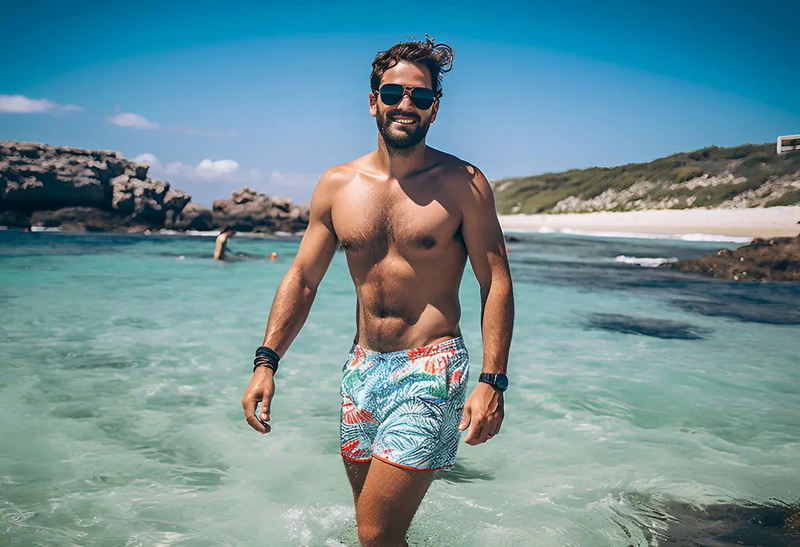
Details can make the difference between an average product and a customer favorite.
Most men's swim shorts include an inner mesh brief lining to keep everything secure during movement. Linings also add modesty and can reduce chafing when designed with soft, high-quality mesh.
- Brief-shaped mesh linings for standard swim shorts.
- Optional unlined or partially lined board shorts for surfers who prefer minimal bulk.
- Flat seams or bonded edges to avoid irritation.
Pockets add everyday functionality but must be designed to perform in water.
- Front or side pockets for casual use and walking.
- Back pockets with drainage eyelets to prevent ballooning.
- Zip or Velcro closures for securing small items like keys.
A secure waistband is critical to prevent wardrobe malfunctions in waves, slides or dives.
- Elastic waist with internal or external drawstrings for adjustable comfort.
- Metal or molded toggles on the ends to prevent fraying and add a premium look.
- Soft inner waist facing to avoid irritation on the skin.
Many performance board shorts use a non-elastic waistband with a lace-up tie plus a fly closure. This “double fail-safe” system prevents the shorts from being pulled off in heavy surf.
- Rigid waist structures with lace-up ties for surf and water sports.
- Velcro or gusseted fly for a secure yet flexible fit.
- Strategic seam placement to avoid rubbing under a board or harness.
Grommets or eyelets allow trapped water and sand to escape, keeping the shorts lighter and more comfortable.
- Placed at the bottom of pockets or along the lower leg panels.
- Can be metal or laser-cut holes backed with reinforced stitching.
- Important for products aimed at surf, river or heavy-sand use.
Length and fit strongly influence how confident a customer feels on the beach or at the pool. This also affects returns and reviews, so getting the fit strategy right is crucial for brands.
Different markets and age groups prefer different inseam lengths.
- 4–5 inch inseam: Sporty, high-mobility look, popular with younger or athletic customers.
- 5–7 inch inseam: Modern, balanced length that works for most heights.
- 7–9 inch inseam: More coverage and closer to the knee, often preferred in conservative markets.
A clear size chart reduces hesitation and improves conversions for online buyers.
- Include waist, hip and inseam measurements in inches and centimeters.
- Explain how to measure waist, hips and inseam with a tape at home.
- Offer guidance on when to size up for a looser, casual fit.
If you are planning a new men's swim line or refreshing an existing range, it helps to think in terms of a small, well-balanced “capsule” first.
Start with one clear primary use case instead of trying to serve everyone at once.
- Performance swimmer, casual vacationer, surf lifestyle or pool party style.
- Target age range and key markets, such as US, EU or Australia.
- Preferred coverage level and style attitude, from classic to bold.
Build a focused mix based on your target customer and positioning.
- One hero style, such as a mid-thigh trunk, as your main volume driver.
- One bolder style, like a brief or short short, for trend-driven customers.
- One longer option, such as a board short, for sports and modesty-oriented buyers.
Fabric, lining and hardware should match your price and brand story.
- Entry-level lines: durable polyester or nylon with standard mesh lining.
- Premium lines: high-stretch blends, soft waistbands, branded drawcord tips and refined hardware.
- Sustainable lines: recycled yarns plus clear eco messaging on hangtags and product pages.
Teaching customers how to care for their swimwear reduces complaints and extends product life, which supports a more sustainable brand image.
- Rinse swimwear in cool, fresh water immediately after use to remove chlorine, salt and sunscreen.
- Hand-wash with mild detergent and avoid bleach and fabric softeners.
- Dry in the shade, flat or hung carefully, and avoid direct sun or tumble dryers that damage stretch fibers.
Brands increasingly use swimwear care guides as part of their after-sales experience and content marketing.
- Include care symbols and simple written instructions on the inner label and product page.
- Create short email or blog content with care tips as part of post-purchase flows.
- Highlight estimated wear hours for performance fabrics to set realistic expectations.
A strong OEM partner is more than just a factory; they are a design and development ally for your men's swim collection.
- Pattern and fit development for different body types and markets.
- Fabric sourcing, from standard polyester to recycled eco options.
- Sampling support, including size sets and fit corrections.
- Advice on construction details, from linings to grommet placement.
Chinese OEM factories with experience in international swimwear markets can help you scale from small test runs to larger wholesale volumes.
- Small minimum order quantities for new men's swim styles as you test demand.
- Private-label options including custom prints, labels and branded hardware.
- Flexible production for brands, wholesalers and other manufacturers needing men's swim OEM support.
If you are ready to launch or upgrade your men's swimwear line, this is the right time to turn your ideas into a structured collection. Partnering with an experienced OEM factory ensures that your designs, fabrics and fits work in real life, not just on paper. As a Chinese swimwear manufacturer, Yongting supports international brands, wholesalers and other producers with style development, fabric sourcing, sampling and bulk orders for men's swimwear.
Share your target market, style mix and price point with our team, and we will help you refine silhouettes, select materials and optimize features for your customers. You can start with a small, focused capsule, test it in your market and then scale the best-sellers with confidence. Contact Yongting today to discuss your next men's swimwear project and build a collection that truly fits your customers and your brand strategy.
Contact us to get more information!
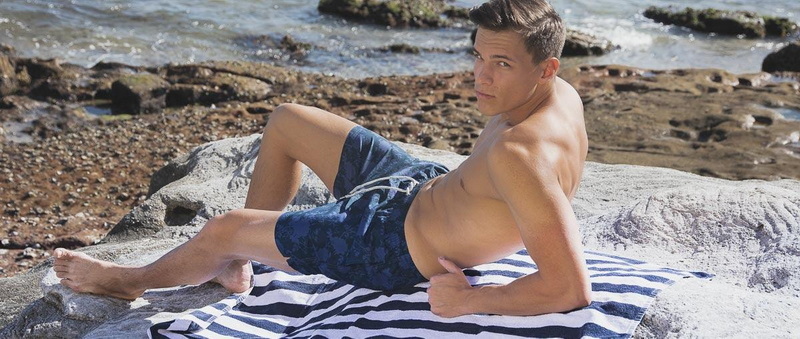
In many markets, mid-thigh swim trunks and shorter swim shorts are the most popular because they balance coverage with a modern, athletic look. Younger customers often choose bolder colors and prints, while older or more conservative buyers still prefer longer board shorts.
Men should look for a hem that falls above the knee for a flattering, versatile fit. Shorter men usually look better in shorter inseams, while very tall men can use a slightly longer inseam to balance leg length.
For everyday beach and pool use, polyester or polyamide blends with some elastane offer a good mix of comfort, durability and stretch. Performance swimmers may prefer high-stretch blends, while eco-focused buyers look for recycled polyester or polyamide options.
Most men appreciate a soft inner mesh lining because it keeps everything secure and reduces the risk of see-through fabric when wet. However, some surfers and advanced swimmers prefer unlined board shorts for greater freedom and faster drying, so offering both options can work well in a collection.
With proper care—rinsing after use, gentle washing and avoiding high heat—a quality pair of swim trunks can last multiple seasons of regular recreational use. Heavy chlorine exposure, frequent hot tub use and rough surfaces will shorten the lifespan, which makes clear care instructions important for customer satisfaction.
1. https://baliswim.com/4-things-to-know-about-mens-swim/
2. https://www.bondijoe.com/blogs/mens-swimwear-style/mens-swimwear-styles-that-are-making-waves-this-year
3. https://www.bondijoe.com/blogs/mens-swim-trunks-comfort-and-fit/size-guide-understanding-mens-swimwear-measurements
4. https://vocla.com/blogs/va-style-guide/mens-swimwear-trends
5. https://maamgic.com/pages/size-guide
6. https://balisummer.com/swimwear-care-guide-what-tips-should-brands-share/


