
Views: 222 Author: Yongting Swimwear Publish Time: 2026-04-23 Origin: Site


If you are serious about launching or scaling a swimwear line, a fabric swatch book is not a "nice-to-have" marketing tool—it is one of the most important decision-making instruments in your product development workflow. As an OEM swimwear manufacturer working with international brands and wholesalers, we see a clear pattern: brands that invest time in working with swatches launch faster, reduce sampling mistakes, and achieve more consistent quality collection after collection. [baliswim]
In this guide, you will learn:
- What a fabric swatch book actually includes and why it matters
- How professional brands use swatches to reduce risk and increase margin
- Expert-level criteria to evaluate swimwear fabrics
- Practical steps to build your own "working" swatch library
- How to use swatches to collaborate efficiently with your OEM partner

A fabric swatch book is a curated, physical reference tool that contains small cut pieces of every fabric your manufacturer offers for swimwear, along with essential technical information for each one. Instead of guessing from photos on a screen, you can see, touch, stretch, and compare materials before you commit to production. [swimwearmanufacturers.co]
A professional swimwear fabric swatch book typically includes for each swatch: [baliswim]
- Fabric name or code (for easy ordering and communication)
- Fiber composition (for example: 82% recycled polyester / 18% elastane)
- Weight (gsm) and structure (for example: ribbed, brushed, compression)
- Color options (solid colors, neon tones, muted colors)
- Print options (allover prints, placement prints, digital prints)
- Finish or feel (matte, glossy, soft touch, shaping, quick-dry)
Because everything is in one physical book, you can quickly build mood boards, design capsules, and compare how colors or prints work together in real light—not just on a backlit monitor. [vintageontap]
Many first-time brands try to choose fabrics from photos or PDFs only. That is where costly mistakes begin.
Screen-based decisions create several risks: [vintageontap]
- Color inaccuracy: Colors on your phone screen rarely match real fabric, especially neons, deep blacks, or very saturated tones. [baliswim]
- No real sense of thickness and weight: You cannot guess whether a fabric is sheer when wet or whether it offers enough coverage. [swimwearmanufacturers.co]
- Texture is invisible: Ribbed, brushed, or embossed textures completely change how a bikini or one-piece looks and feels in person. [swimwearmanufacturers.co]
- Fit and support are unknown: Without stretching a swatch, you will not know if it has the recovery and power you need for shaping or sports-focused pieces. [swimwearmanufacturers.co]
By contrast, a fabric swatch book allows you to simulate the customer experience with your own hands: you can stretch, scrunch, drape, and layer fabrics the way your end consumer will experience them in the fitting room or at the beach. [swimwearmanufacturers.co]
When you hold a swimwear fabric swatch in your hand, you are not just looking at color—you are reading performance, durability, and brand positioning. [baliswim]
Here is what expert buyers and designers check:
- Exact composition – Tells you how the fabric will behave in chlorine, salt water, and sunlight. [baliswim]
- Stretch and recovery – Indicates whether the fabric will sag after a few wears or maintain shape. [swimwearmanufacturers.co]
- Weight and opacity – Critical for light colors and white styles to prevent see-through when wet. [swimwearmanufacturers.co]
- Handfeel – Soft, brushed, firm, compressive, or slick; this influences perceived quality and comfort. [swimwearmanufacturers.co]
- Surface appearance – Matte vs. glossy, ribbed vs. smooth, which strongly affects your brand's visual identity. [baliswim]
- Color depth and vibrancy – Especially important for printed swimwear and bold brand concepts. [baliswim]
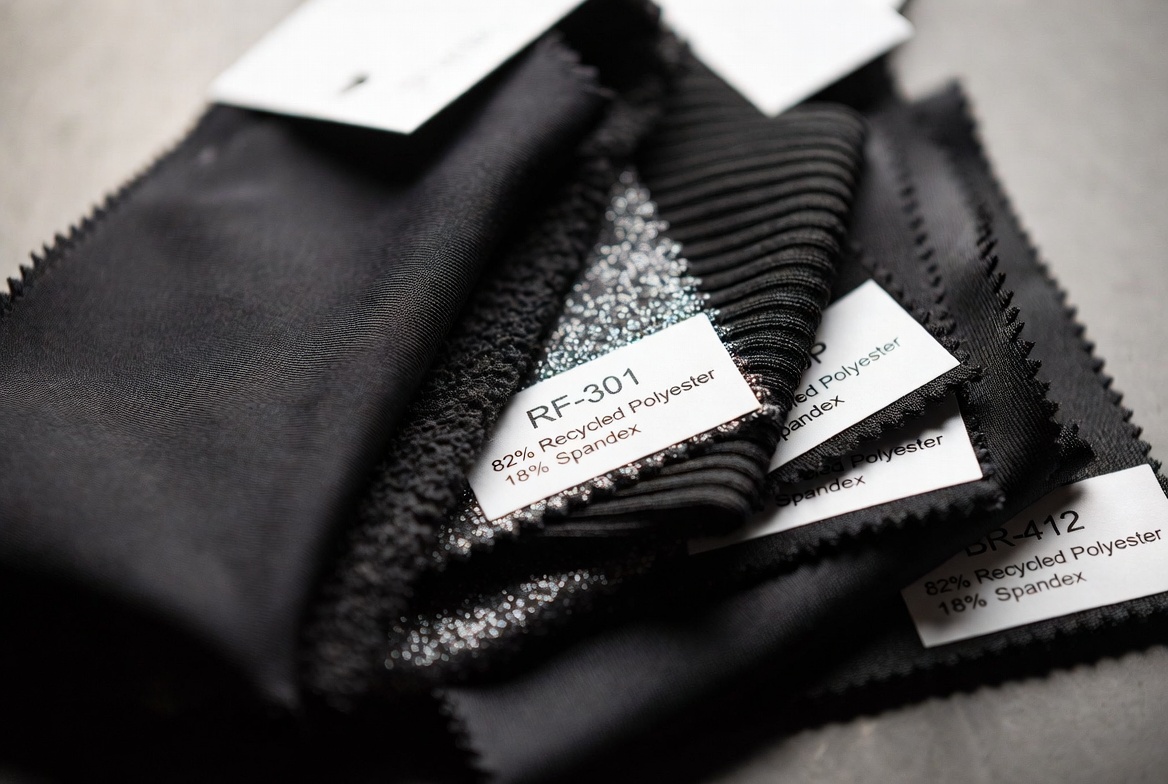
From an OEM manufacturer's viewpoint, a fabric swatch book is one of the most effective tools to reduce sampling rounds, avoid miscommunication, and prevent costly production errors. [marketveep]
Brands that choose fabrics directly from swatch books usually need fewer sample iterations, because the material expectations are aligned from the beginning. That means: [swimwearmanufacturers.co]
- Faster time-to-market
- Lower sample shipping and development cost
- Less back-and-forth over "this is not the color/feel I expected"
When both you and your OEM factory refer to the same physical swatch and fabric code, you eliminate vague requests like "a bit thicker," or "more shiny," which are difficult to translate into production. [swimwearmanufacturers.co]
Instead, you can specify:
- "Use fabric code YT-208, 220 gsm, matte, color 13 Dusty Sage."
- "Match the rib structure of swatch RT-12 but using the color palette from RT-21."
This level of clarity is exactly what your OEM manufacturer needs to deliver consistent quality from sample to bulk. [swimwearmanufacturers.co]
End customers return swimwear mainly due to fit issues, transparency, or uncomfortable feel on the skin. Working with swatches allows you to proactively avoid these problems by validating opacity, stretch, and softness before production. [blockandtam]
In the long term, that leads to:
- Fewer complaints and returns
- Stronger product reviews
- Higher repeat purchase rate
As a swimwear OEM working with both emerging and established brands, we recommend that you evaluate fabric swatches using five professional criteria. [brandignity]
- Gently stretch the swatch in both directions.
- Release it and observe whether it returns to its original size.
- For sports or shaping swimwear, you want strong power and recovery.
- Hold the fabric against light, especially in light colors.
- Simulate "under water" by layering the swatch over a darker surface.
- Ensure it provides enough coverage for your target market (different regions have different expectations).
- Rub the fabric against the inside of your forearm or neck.
- Notice any roughness, itching, or plastic-like sensation.
- For premium or luxury positioning, prioritize buttery-soft handfeel with stable recovery. [blockandtam]
- Ask: does this fabric visually represent the mood of your brand?
- Matte, sculpting fabrics often fit minimal, modern brands.
- Glossy or shimmer fabrics can support bold, statement brands.
- Look for recycled fibers or eco-certified materials.
- Ensure composition and certificates are clearly documented by your supplier.
- These attributes help support your brand story and E-E-A-T when you describe your sourcing and production ethics on your website. [getpassionfruit])
Instead of treating your swatch book as a one-time brochure, turn it into a living, working library that evolves with your collections. [marketveep]
1. Order the full swimwear fabric swatch book from your OEM partner
Get access to the entire active fabric range—core basics, seasonal colors, prints, and specialty materials. [baliswim]
2. Group swatches by usage
- Core solids (your evergreen basics)
- Fashion colors (seasonal drops)
- Sport/performance fabrics
- Textured or ribbed materials
- Eco / recycled ranges
3. Create a "favorites" section for approved fabrics
Use stickers, tags, or a simple rating system (★ to ★★★★★).
These become your go-to fabrics for future collections, speeding up design decisions.
4. Document your decisions
Next to each "approved" swatch, note:
- Style numbers that use this fabric
- Regions or retailers that prefer it
- Price band and target margin
This transforms your swatch book into a strategic planning tool, not just a catalog. [marketveep]
5. Review and update seasonally
At least once per season, review the swatch book with your OEM partner to:
- Remove discontinued fabrics
- Add new eco or fashion options
- Align on stock availability and lead times
| Swatch Category | Typical Use Case | Notes |
|---|---|---|
| Core Solids | Evergreen bikinis & one-pieces | High volume, stable supply (baliswim) |
| Seasonal Fashion Colors | Limited capsule collections | Trend-driven, small runs (marketveep) |
| Performance Fabrics | Sport, surf, active swimwear | High stretch & recovery (swimwearmanufacturers.co) |
| Textured Fabrics | Premium, visually rich collections | Higher perceived value (swimwearmanufacturers.co) |
| Eco / Recycled | Sustainable-focused lines | Strong storytelling angle (getpassionfruit) |

Google's E-E-A-T framework (Experience, Expertise, Authoritativeness, Trustworthiness) is not only about blog posts; it also applies to how transparently you present product details and sourcing on your site. [getpassionfruit])
Using a fabric swatch book as a base, you can improve your website in several ways:
- Experience: Share first-hand insights about why you chose specific fabrics (for example, "Tested 12 different Lycra blends using physical swatches before selecting this one for superior stretch and shape retention"). [getpassionfruit])
- Expertise: Explain technical attributes such as composition, gsm, and UV/chlorine resistance in simple language on your product pages and fabric guides. [blockandtam]
- Authoritativeness: Publish detailed swimwear fabric guides that show you have hands-on knowledge of materials, not just generic product descriptions. [getpassionfruit])
- Trustworthiness: Be transparent: list composition, care instructions, and sourcing information for each style. [blockandtam]
Brands that implement this approach on their content and product pages typically see higher engagement, lower bounce rate, and better organic visibility, particularly in competitive apparel niches. [brandignity]
From our daily work with international swimwear brands and wholesalers, we see three high-impact use cases for fabric swatch books.
Before sketching designs, senior designers sit down with the swatch book to:
- Define the core fabric for the season (for example, a sculpting matte fabric).
- Select 3–5 main colors and 1–2 highlight prints.
- Align with the OEM manufacturer on availability, minimum orders, and lead times.
This planning step can shorten the entire development cycle because fabric decisions are clear from day one. [marketveep]
Some brands strategically use a signature fabric across multiple collections to become instantly recognizable.
Example patterns we see in practice: [swimwearmanufacturers.co]
- Using the same ribbed fabric in different seasonal colors to maintain continuity.
- Keeping one hero texture (for example, crinkle or shimmer) that becomes part of the brand's identity.
Your swatch book is where you identify and commit to that signature look.
Wholesalers or private-label partners often need exclusive colors or prints. With a swatch book, you can:
- Quickly propose multiple base fabrics and colorways.
- Show realistic combinations in person during meetings or online calls.
- Confirm fabric and color codes with your OEM factory to move smoothly into development.
This speeds up decision-making and builds trust with your B2B partners. [marketveep]
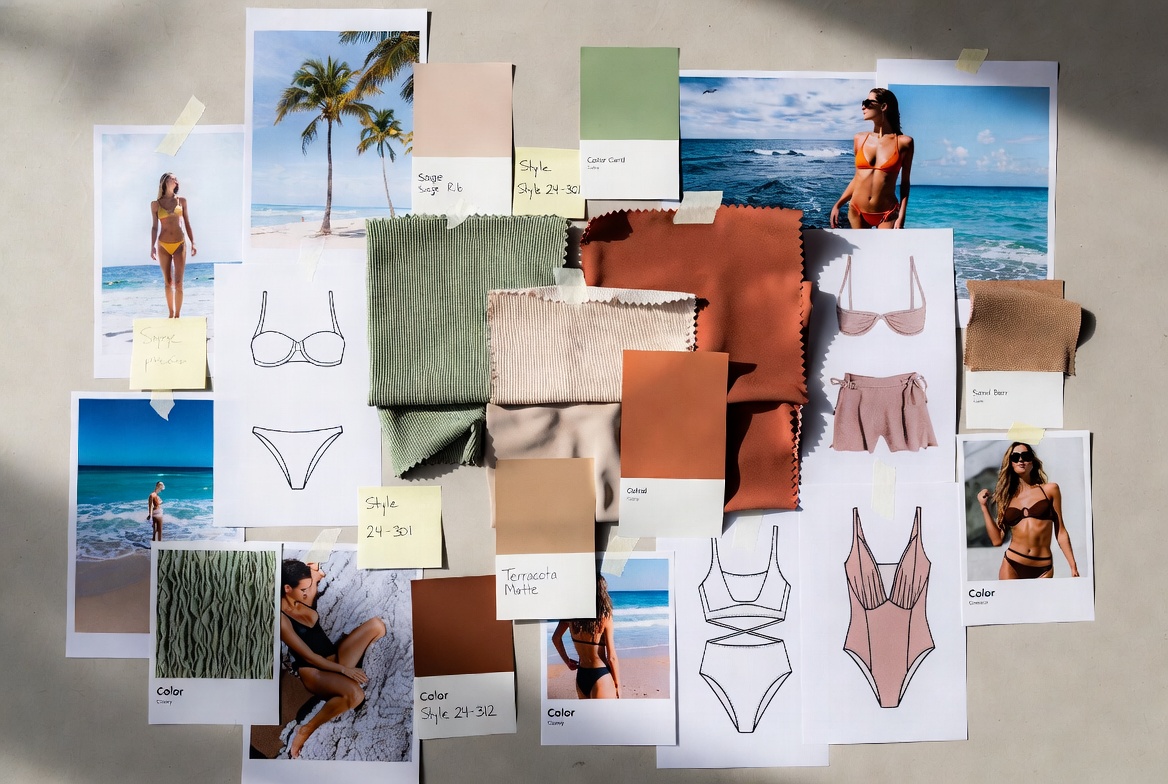
A fabric swatch book is most powerful when it becomes the shared language between your brand and your OEM manufacturer. [swimwearmanufacturers.co]
To maximize its value:
- Always refer to fabric codes and swatch names when requesting samples or changes.
- Take photos of your annotated swatches and share them with your OEM when you discuss adjustments.
- When something is not working in a sample, describe the issue and point to an alternative swatch you prefer (for example, "the fabric used in the sample is too thin; please switch to the same fabric as swatch YT-315, color 08").
This level of precision makes the production process smoother and significantly reduces misunderstandings. [swimwearmanufacturers.co]
If you are planning to launch a swimwear brand, expand your current line, or develop private-label swimwear, your next move is simple:
> Request a complete swimwear fabric swatch book from our OEM team and start building your collection with confidence.
With Yongting as your swimwear OEM partner, you can:
- Explore a curated range of swimwear-ready fabrics (including eco options).
- Match colors and textures to your brand DNA before you order samples.
- Reduce production risk, save time, and launch more consistent collections season after season.
Start your swimwear project with one-on-one support, low MOQ options, and a professional fabric swatch book to guide every decision.
1. Do I really need a fabric swatch book if I already have digital catalogs?
Yes. Digital catalogs are useful for an overview, but they cannot show true color, thickness, texture, or opacity. A physical swatch book gives you the real-life information you need to make correct decisions and avoid surprises in sampling or production. [vintageontap]
2. How many fabrics should I select for my first swimwear collection?
Most new brands succeed with one main base fabric, 3–5 core colors, and 1–2 highlight fabrics (such as a rib or print) to add interest. Selecting fewer, well-tested options is better than spreading your budget across too many unproven fabrics. [marketveep]
3. Can I use the same fabric for bikinis and one-pieces?
In many cases, yes. A high-quality swimwear fabric with good stretch, recovery, and opacity can be used for both bikinis and one-pieces. For shaping or plus-size styles, you might choose a fabric with more power or add lining for extra support. [brandignity]
4. How often should I refresh my fabric swatch book?
At least once per season. Fabrics can be discontinued, and new eco, performance, or fashion options appear regularly. Reviewing swatches with your OEM partner seasonally helps keep your collections on-trend and technically up to date. [marketveep]
5. What if my target market is very price-sensitive?
Swatch books are especially important in price-sensitive markets. By comparing fabrics side-by-side, you can identify materials that balance cost, performance, and brand positioning, so you do not sacrifice quality or fit just to save a small percentage on fabric cost. [marketveep]
- Bali Swim – "The Importance of Fabric Swatch Book"
<https://baliswim.com/why-fabric-swatch-book-important/> [baliswim]
- Swimwear Manufacturers – "Fabric Swatch Explained: Your Comprehensive Guide"
<https://www.swimwearmanufacturers.co.uk/post/fabric-swatch-explained-everything-you-need-to-know> [swimwearmanufacturers.co]
- Vintage on Tap – "How (and Why!) to Set Up a Fabric Swatch Book!"
<https://vintageontap.com/set-up-fabric-swatch-book/> [vintageontap]
- Passionfruit – "How to Optimize Your Ecommerce Site for E-E-A-T in 2025 (Like a Pro)"
<https://www.getpassionfruit.com/blog/how-to-optimize-your-ecommerce-site-for-e-e-a-t-in-2025-(like-a-pro)> [getpassionfruit])
- MarketVeep – "4 Best Practices for Your Content SEO Strategy in Manufacturing"
<https://www.marketveep.com/blog/4-best-practices-for-your-content-seo-strategy-in-manufacturing> [marketveep]
- Brandignity – "SEO for Women's Swimwear Brands: Driving Traffic to Your Online ..."
<https://www.marketveep.com/blog/4-best-practices-for-your-content-seo-strategy-in-manufacturing> [brandignity]
- Block & Tam – "E-E-A-T Guide: Creating Helpful Content For Luxury Brands"
<https://www.blockandtam.com/insights/e-e-a-t> [blockandtam]


