
Views: 222 Author: Yongting Swimwear Publish Time: 2026-05-15 Origin: Site


China remains one of the most efficient and scalable production bases for beach cover up dresses, combining mature supply chains with competitive pricing and increasingly strict compliance standards. For sourcing managers planning mid‑ to long‑term partnerships, understanding how to evaluate factories beyond price is now a core competency. [accio]
Before listing the manufacturers, it is important to clarify how a "good" beach cover up supplier is defined from a professional buyer's perspective. We combined public data, industry reports, B2B platform profiles and real OEM case studies to shortlist 10 representative factories in China. [made-in-china]
Key evaluation dimensions:
- Factory qualifications and compliance
- Existence of ISO 9001 or similar quality management systems to control defect rates and ensure consistency. [linkedin]
- Social compliance credentials such as BSCI or WRAP where available, especially for EU/US retail programs. [telige]
- Product and R&D capability in beach cover ups
- Specialization in swimwear, resort wear or beach cover ups rather than generic fashion only. [sourceready]
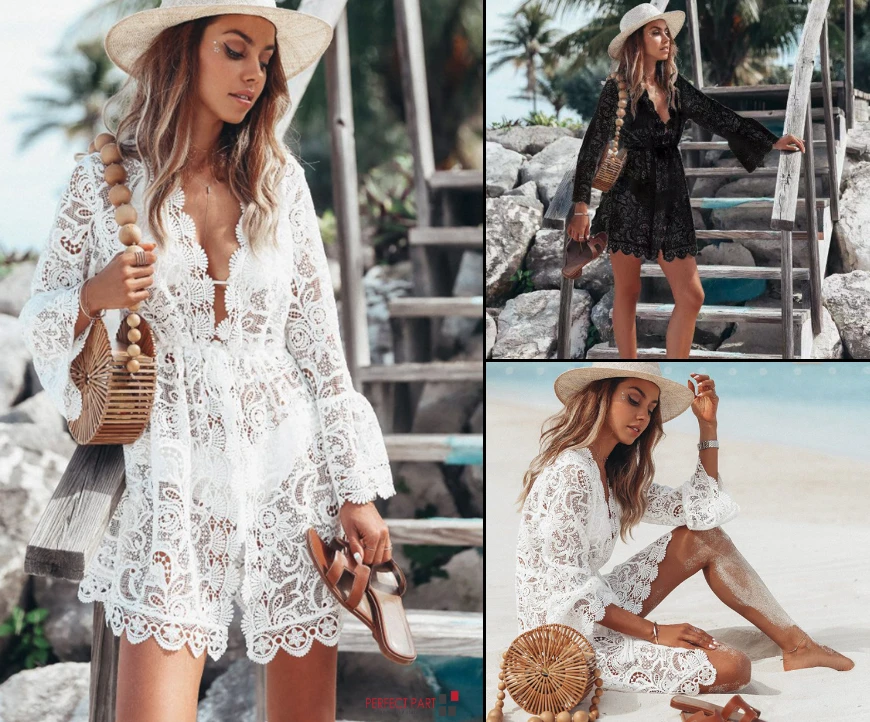
- Ability to develop patterns for kaftan, sarong, crochet, lace and chiffon cover up dresses in line with 2025–2026 beachwear trends. [surfsidewear]
- Capacity, stability and scalability
- Monthly output, workforce size and plant area to support seasonal peaks. [sohoinchina]
- Typical MOQs (often 100–300pcs per style in swimwear and cover‑up categories) and flexibility for new brands. [baliswim]
- Export experience and target markets
- Proven track record with Europe, North America, Australia or South Africa buyers, where regulatory and testing requirements are stricter. [statista]
- OEM/ODM service scope
- In‑house design or pattern teams, fabric sourcing support (including recycled or OEKO‑TEX certified materials), packaging, and logistics coordination. [accio]
This list is not an absolute ranking but a curated "shortlist" designed to help sourcing managers narrow down candidates for RFQs and sample orders.
China still dominates global apparel exports, with garments and accessories exports reaching hundreds of billions of U.S. dollars in recent years despite margin pressure and ESG requirements. Within apparel, swimwear and beachwear benefit from several highly specialized industrial clusters. [statista]
Major cluster advantages:
- Pearl River Delta (Guangdong) – including Dongguan, Shenzhen and Shantou
- Strong in technical sportswear, swimwear and fast fashion with integrated design, printing and logistics. [sohoinchina]
- High density of fabric mills supplying nylon, polyester, and recycled yarns suitable for cover ups. [accio]
- Fujian / Coastal South – e.g. Jinjiang, Shishi
- Historic base for sportswear and swimwear OEM for global brands, with vertical integration from knitting to dyeing to garmenting. [sohoinchina]
- Yangtze River Delta (Zhejiang, Jiangsu)
- Strength in woven dresses, lightweight viscose, and sustainable knits, which are widely used in beach cover up dresses. [sohoinchina]
These clusters reduce lead times, lower logistics complexity, and make it easier to integrate functions like digital printing, embroidery and lacework into beach cover up lines. [accio]
Although beach cover up dresses look simple at retail, the technical requirements for B2B production are non‑trivial.
Key material and construction considerations:
- Fabric choices
- Lightweight woven fabrics (rayon, viscose, chiffon, georgette, cotton voile) for drape and breathability. [scarfmanufacturer]
- Knitted options (cotton blends, crochet, lace, open‑work knits) for sheer, textured looks, often used in 2026 trend lines. [velvetimagelab]
- Performance and comfort
- Colorfastness to seawater, chlorinated water and UV, especially for coordinated pieces sold with swimwear. [telige]
- Hand‑feel and pH value suitable for prolonged skin contact, where OEKO‑TEX Standard 100 is increasingly requested by EU/US buyers. [telige]
- Certifications and chemical safety
- OEKO‑TEX Standard 100 for fabric and trims, ensuring absence of harmful substances such as azo dyes and heavy metals. [telige]
- For sustainable ranges, some buyers additionally request GRS (recycled polyester) or GOTS (organic cotton) in fabric supply. [shanghaigarment]
- Manufacturing standards
- ISO 9001:2015 quality systems help garment factories stabilize processes, reduce defects and drive continuous improvement. [linkedin]
- Social compliance (BSCI, WRAP) is often a prerequisite for big box retailers; note this covers working conditions rather than product safety. [telige]
In practice, many mid‑size brands will prioritize OEKO‑TEX and BSCI first, then gradually push for GRS/GOTS once core volumes are stable. [accio]

Below is a curated list of 10 manufacturers active in swimwear/beachwear, resort wear, or related categories, suitable as potential partners for beach cover up dress programs. Descriptions are based on publicly available information and typical cluster profiles. [yong-ting]
Dongguan Yongting Clothing Co., Ltd. is an OEM/ODM swimwear specialist with over 15 years of experience, operating a 3,000 m² factory in Guangdong with nearly 200 workers. The factory's monthly capacity reaches around 200,000 pieces of swimwear and related products, including bikinis, one‑pieces, surf suits and complementary beach items.
Yongting has supplied major global retailers such as Lidl, Target, H&M, Oysho, Zara and Decathlon, which indicates robust quality systems and mature export know‑how. For beach cover up dresses, Yongting is particularly suitable for:
- Brands seeking high cost‑performance, with stable quality at mid‑range price points.
- Small to mid‑size labels needing flexible MOQs, multiple styles per order, and fast sampling for new collections. [yong-ting]
- Buyers who value responsive communication and support in pattern development, fabric selection and packaging.
Yongting's 12 departments (including design, QC and logistics) allow it to support deeper OEM customization – from print design to hangtag/packaging – rather than only basic cut‑and‑sew. This makes Yongting a strong candidate for long‑term, design‑driven collections of beach cover up dresses coordinated with swimwear.

Jingqi Apparel is highlighted in several industry blogs as an integrated OEM covering beach cover ups, lightweight dresses and printed scarves. Located in Zhejiang, it benefits from local access to viscose and polyester printing mills, ideal for brightly patterned beach cover ups. [scarfmanufacturer]
The factory positions itself around:
- Strong fabric sourcing capability for printed and dyed lightweight fabrics. [scarfmanufacturer]
- Integrated OEM services across beachwear and accessories, suitable for brands that want cohesive resort collections. [scarfmanufacturer]
For buyers focused on design variety and rapid print iteration, Jingqi is a useful option in East China clusters.
Abely Fashion appears in swimwear manufacturer shortlists and focuses on fashionable swimwear and related styles. Based in one of China's coastal apparel hubs, Abely typically works with emerging brands looking for trend‑driven silhouettes and digital prints. [sourceready]
Typical advantages include:
- Strong pattern and grading support for women's beachwear collections. [sourceready]
- Experience with mid‑sized brand programs in Europe and North America. [sourceready]
For beach cover up dresses, Abely fits brands wanting a more fashion‑driven aesthetic and frequent collection refreshes.
Hongyu Apparel is a full‑range clothing manufacturer that also provides swimwear and beachwear OEM services. With multi‑category lines, Hongyu can support clients who want to bundle swimwear, cover ups and casual dresses under one supplier. [yong-ting]
Key strengths:
- Ability to manage complex SKUs and across‑category assortments. [sourceready]
- Helpful for importers consolidating multiple product lines in one shipment.
However, because the business is diversified, buyers should pay extra attention to sampling and PP approvals on cover up dresses to ensure the same fit and drape standards across styles.
Unijoy Swimwear focuses on swimwear manufacturing and appears frequently in "top swimwear manufacturers in China" style listings. Many such swimwear‑specialized factories have added beach cover ups to increase basket size per client. [yong-ting]
Advantages for buyers:
- Processes and lines already tuned for seasonal swimwear cycles and export lead times. [sourceready]
- Ability to coordinate colors and prints between bikinis and matching cover ups. [surfsidewear]
When negotiating, clarify whether cover ups are produced in‑house or subcontracted, and align QC expectations accordingly.
Wisrose Garment Co., Ltd. is another OEM appearing in swimwear and beachwear manufacturer lists. With multi‑product garment capacity, it can provide woven beach dresses, tunics and kaftans that coordinate with knit swimwear programs. [yong-ting]
Highlights:
- Capacity to handle both simple and embellished cover up designs. [yong-ting]
- Suitability for distributors and wholesalers who need volume plus style breadth.
Fujian KLAIT is listed on B2B platforms as a supplier of women's beach cover ups and lace maxi dresses. As an import‑export company integrated with local factories, it focuses on competitive pricing and large‑volume orders. [made-in-china]
Key points:
- Strong for price‑sensitive programs where FOB cost is a primary driver. [made-in-china]
- Suitable for discount and mass‑market channels that expect straightforward designs and bulk volumes.
For buyers using trading‑company‑driven models, care should be taken to clarify which underlying factory will actually produce the goods and what certifications they hold.
WELON (China) Ltd. appears among beach wear cover up dress suppliers on major B2B platforms with competitive listed prices. It typically targets bulk buyers who source via online platforms rather than direct factory scouting. [made-in-china]
Strengths and considerations:
- Transparent, platform‑based price references for common styles. [made-in-china]
- Efficient for simple, repeat orders but may require more communication effort for complex, branded OEM projects.
Guangzhou Yifu Clothing Co., Ltd. is another South China supplier visible in cover up and beachwear categories on sourcing portals. Located near the Guangzhou wholesale and fabric markets, it can rapidly access a wide variety of lace, chiffon and printed fabrics. [made-in-china]
This proximity allows:
- Fast fabric swatching and small test runs for new cover up styles. [made-in-china]
- Support for brands that iterate designs quickly based on retail sell‑through.
Beyond the above names, there are numerous specialized swimwear and beachwear factories clustered in Guangdong, Fujian and emerging hubs such as Xingcheng in northeast China. Many of these mid‑sized factories produce beach cover ups alongside bikinis and one‑pieces, leveraging shared cutting and sewing lines. [sinofinetex]
Industry data indicates that China's men's swimwear market alone is on a growth trajectory, which indirectly supports broader swimwear and beachwear capacity expansion through 2030. For strategic buyers, conducting a targeted search inside these clusters and shortlisting 3–5 candidates for onsite or virtual audits is often more effective than relying solely on platform rankings. [grandviewresearch]
The following table summarizes typical profiles and positioning based on public information and common industry ranges; actual figures should be confirmed directly during RFQ.
| Manufacturer | Typical focus | Indicative monthly capacity | Indicative MOQ (per style) | Likely/typical certifications & strengths |
|---|---|---|---|---|
| Dongguan Yongting Clothing Co., Ltd. | Swimwear + beach cover ups OEM/ODM | Around 200,000 pcs swimwear & related items | Often 100–300 pcs (to be confirmed; aligned with swimwear norms) (vista-clothing) | Mature export to EU/US retail, 12 departments, strong OEM development support (sohoinchina) |
| Jingqi Apparel | Beach cover ups, scarves, lightweight dresses (scarfmanufacturer) | Mid‑size integrated facility (scarfmanufacturer) | Around 100–300 pcs typical for category (vista-clothing) | Good access to printed lightweight fabrics in Zhejiang cluster (scarfmanufacturer) |
| Abely Fashion Co., Ltd. | Fashion swimwear & beachwear OEM (yong-ting) | Mid‑ to large‑scale swimwear lines (sourceready) | Around 100–300 pcs per style (vista-clothing) | Trend‑driven design support, Western market focus (sourceready) |
| Hongyu Apparel | Multi‑category apparel + swimwear (yong-ting) | Large, multi‑line garment capacity (sourceready) | Negotiable, often higher for complex programs (vista-clothing) | Can consolidate multiple categories in one vendor (sourceready) |
| Unijoy Swimwear | Swimwear OEM, adding cover ups (yong-ting) | Specialised swimwear facility (sourceready) | About 100–200 pcs common in swimwear (vista-clothing) | Efficient for coordinated swim + cover up sets (surfsidewear) |
| Wisrose Garment Co., Ltd. | Garment OEM incl. beachwear (yong-ting) | Mid‑ to high‑volume | Around 150–300 pcs typical (vista-clothing) | Suitable for wholesalers and importers needing many SKUs (yong-ting) |
| Fujian KLAIT Imp. & Exp. Co., Ltd. | Export‑oriented beach cover ups (made-in-china) | Aggregated via partner factories (made-in-china) | Often ≥300 pcs for price‑driven orders (baliswim) | Strong price competitiveness, lace maxi cover ups (made-in-china) |
| WELON (China) Ltd. | B2B beach cover ups on platforms (made-in-china) | Platform‑oriented bulk supplier (made-in-china) | Style‑specific, often 100–500 pcs (made-in-china) | Transparent online quotes, good for standard items (made-in-china) |
| Guangzhou Yifu Clothing Co., Ltd. | Fashion & beachwear OEM (made-in-china) | Medium facility in Guangzhou area | Around 100–300 pcs per style (vista-clothing) | Fast sourcing from local markets, flexible small runs (sohoinchina) |
| Other cluster‑based factories (e.g., Fujian, Xingcheng) | Swimwear + cover ups (sinofinetex) | From 50,000 to 300,000 pcs/month depending on plant (sohoinchina) | Typically 100–300 pcs, sometimes higher (vista-clothing) | Strong cluster synergies, good for scaling volumes (sohoinchina) |
All certifications (ISO, BSCI, OEKO‑TEX, GRS, GOTS) must be verified directly with the factory and the issuing body rather than assumed. [shanghaigarment]
Many sourcing managers now treat certification verification as a standard step rather than an optional extra.
Practical steps:
- For BSCI: Request the amfori/BSCI audit ID, then verify via the amfori platform or via your in‑house or partner membership network. [shanghaigarment]
- For OEKO‑TEX Standard 100: Use the official label check tool with the certificate number to confirm validity, product scope and expiry date. [shanghaigarment]
- For ISO 9001: Confirm that the certificate lists a reputable auditing body (e.g., SGS, Intertek, Bureau Veritas) and is still in force. [linkedin]
Red flags include blurred logos, mismatched factory names, missing certificate numbers, or expired dates on documents – all of which are commonly observed in forged or recycled certificates. [shanghaigarment]
In activewear and swimwear, typical MOQs are around 100 pieces per style to balance production efficiency and cost. Some suppliers will set higher MOQs (e.g., 300–500pcs) for complex designs or sustainable fabrics, while others will offer lower MOQs at a price premium. [vista-clothing]
To avoid misunderstandings:
- Clarify whether MOQ is per style, per color or per print.
- Ask how MOQs change for recycled or certified fabrics, which often require higher minimums. [vista-clothing]
- Separate MOQ for PP samples, SMS (salesman samples) and bulk runs in your RFQ.
A structured sampling process helps you filter out unsuitable suppliers early.
Suggested sequence:
1. Request basic fabric swatches and existing cover up samples to evaluate hand‑feel, workmanship and finishing.
2. Move to custom proto samples using your patterns or tech packs; check fit, shrinkage after washing and colorfastness. [telige]
3. After confirmation, issue PP (pre‑production) samples against final fabric and trims for mass production reference.
For EU/US markets, consider third‑party lab tests (colorfastness, dimensional stability, chemical compliance) for at least one style per program. [sohoinchina]
China's apparel clusters are well connected to major ports, but congestion and seasonal peaks still affect lead times. To reduce risk: [sohoinchina]
- Confirm standard lead time (e.g., 45–60 days after PP approval) and how it changes during peak seasons.
- Ask whether the supplier has experience with your target port and can coordinate with your nominated forwarder.
Beyond common issues like quality variation, there are several insider pitfalls rarely discussed openly online but frequently encountered by experienced buyers:
- Pattern library reuse without clear IP discussion
- Some factories quietly reuse successful cover up patterns developed for one client in other clients' collections, especially when the client provided only rough sketches. [sohoinchina]
- Mitigation: Include basic IP clauses in your PO or vendor manual and request confirmation that your unique patterns/prints will not be offered to others during the active season.
- Fabric "downgrade" at re‑order
- On repeat orders, a few suppliers may switch to similar‑looking but lower‑grade fabric to protect margin when material prices rise. [sohoinchina]
- Mitigation: Maintain a retained fabric swatch and require lab dip and GSM confirmation for each reorder; link payment milestones to PP approval that matches the original spec.
- Certification scope mismatch
- Factories sometimes present OEKO‑TEX or GRS certificates that cover only yarn or greige fabric from a mill, not the finished garment or trim set you are buying. [shanghaigarment]
- Mitigation: Cross‑check whether your exact product type (e.g., "women's woven beach dresses") is within the certificate's scope and confirm which production steps are covered.
These "hidden" issues can significantly affect brand risk and compliance, especially for retailers under tightening ESG rules. [sohoinchina]
China's apparel manufacturing sector is evolving under rising labor costs and tougher ESG mandates, with coastal clusters seeing average wage growth above 6% annually. Despite this, integrated supply chains and automation adoption allow competitive FOB levels and improved speed‑to‑market for fashion and beachwear buyers. [sohoinchina]
Market forecasts indicate sustained growth in swimwear‑related categories, which supports continued investment in material innovation and eco‑friendly fabrics. For buyers, this means more options in recycled and certified fabrics for cover up dresses, but also more complex sourcing decisions around cost vs. sustainability. [grandviewresearch]
Selecting a beach cover up dress manufacturer in China is no longer just about finding the lowest FOB; it is about balancing certifications, capacity, R&D capability and communication style to build a resilient supply chain. For sourcing managers, shortlisting a mix of large, cluster‑based factories and agile partners such as Dongguan Yongting Clothing Co., Ltd. can provide both stability and flexibility for 2026 and beyond. [accio]
If you are planning to launch or expand a beach cover up collection, start by defining your required certifications, realistic MOQs and target price band, then approach 3–5 of the above manufacturers with a structured RFQ and sampling plan.

1. How can I check if a factory's ISO 9001 certificate is still valid and authentic?
- Ask for the full ISO 9001 certificate with certificate number and auditing body, then verify it via the auditing organization's website or an accreditation directory such as IAF. Matching factory name, address and validity dates is essential. [linkedin]
2. How do I confirm that OEKO‑TEX really covers my beach cover up dresses, not just fabric rolls?
- Use the OEKO‑TEX label or certificate number on the official website, then check whether the certified article description matches your product category and whether the certificate is still within its validity period. If needed, email OEKO‑TEX or the issuer for confirmation. [shanghaigarment]
3. What is a reasonable defect rate for beach cover up dresses in bulk shipments?
- In well‑managed garment factories operating under ISO 9001‑style systems, many buyers set AQL levels that translate into low single‑digit defect percentages in final inspections. Anything significantly above that triggers corrective action or rejection depending on your quality agreement. [linkedin]
4. How can I prevent my designs from being shared with other brands in the same factory?
- Use NDAs and vendor manuals that explicitly restrict pattern and print reuse, and avoid sending editable original files until trust is established. Periodically monitor online marketplaces for suspiciously similar designs and raise concerns promptly if you find overlaps. [sohoinchina]
5. For a new brand, should I prioritize low MOQ or low FOB price when choosing a supplier?
- Most successful emerging brands prioritize realistic MOQs and quality over the absolute lowest price, because high MOQs can trap cash in inventory and quality issues damage early brand reputation. Once volume stabilizes, you can use multi‑supplier benchmarking to optimize cost. [baliswim]
- China apparel manufacturing clusters and ESG trends (Soho in China) – overview of labor cost, cluster structure and sustainability metrics. [sohoinchina]
- Statista – China garments export value and apparel market outlook. [statista]
- Sustainable swimwear manufacturers and certifications in China – GRS/OEKO‑TEX overview. [accio]
- ISO 9001 in garment manufacturing – quality management basics. [linkedin]
- Certificate verification methods for BSCI, GOTS and OEKO‑TEX. [telige]
- MOQ guides for activewear and swimwear. [baliswim]


