
Views: 222 Author: Yongting Swimwear Publish Time: 2026-06-11 Origin: Site


Content Menu
● Introduction: Why Source Custom Swimsuits for the French Market
● How We Evaluate High‑Quality Swimwear Suppliers
● Technical Considerations for Custom Swimsuits
● Why France Is a Strategic Swimwear Cluster
● Selection Criteria for This 2026 Shortlist
● Top Custom Swimsuits Manufacturers and Suppliers Serving France
>> 2. Aquasphere (France / International)
>> 3. Zoggs (Europe‑focused brand)
>> 4. Tex Garment Zone – Swimwear Division (Bangladesh, serving France/EU)
>> 5. Active Wear Productions (Swimwear OEM)
>> 6. Dongguan Yongting Clothing Co., Ltd. (China – Flexible OEM/ODM Partner for Mid‑Size Brands)
>> 7. Selected European‑Facing OEM Networks (China, Tunisia, Italy)
● Comparative Snapshot: Capacity, MOQ, and Certifications
>> Key operational parameters for selected suppliers
● Common Pitfalls When Sourcing Custom Swimsuits (and How to Avoid Them)
>> 1. Sub‑standard fabrics and linings
>> 2. Inconsistent pattern grading and fit
>> 3. Over‑promised capacity and under‑delivered lead times
● Insider "Avoidance Guide" Few People Talk About
● How to Verify Factory Certifications and Compliance
● Buyer's Guide: From RFQ to Delivered Custom Swimsuits
>> Step 1: Shortlist and initial RFQ
>> Step 2: Sampling and fit approval
>> Step 3: Contracting and production planning
>> Step 4: Logistics and documentation
>> Step 5: Post‑delivery review
● Conclusion and Next Steps (CTA)
● Frequently Asked Advanced Questions from Procurement Managers
France remains one of Europe's most dynamic swimwear markets, driven by strong beach tourism, pool culture, and sports participation. Men's swimwear revenue alone reached around 335 million USD in 2024 and is projected to grow steadily towards 2030, signalling healthy long‑term demand. For brands and wholesalers, this makes France an important destination market—even if production itself is often done in specialized manufacturing hubs such as China, Tunisia, Bangladesh, and other low‑cost but compliant regions. [grandviewresearch]
Because many "French" brands now rely on global OEM/ODM partners, the real competitive edge lies in selecting factories that understand EU quality, fit, and compliance expectations while offering flexible MOQs and reliable delivery schedules. This guide focuses on manufacturers and suppliers that can support brands selling into France, combining French and EU‑based companies with international factories that already serve major European retailers. [tgzuniform]

Professional procurement managers cannot rely on brand image alone; they need a structured, auditable way to judge factories. For this guide, we applied a set of criteria that reflect how experienced buyers typically screen custom swimwear suppliers: [grandviewresearch]
- Factory certifications and audits:
We prioritize suppliers with documented social and quality audits such as BSCI, SEDEX, WRAP, and ISO‑based quality systems, as these demonstrate baseline compliance for EU buyers. [activewearproductions]
- R&D and product development capability:
Strong development teams for pattern making, grading, fabric testing, and fit approval are critical for custom collections and brand‑specific silhouettes. [activewearproductions]
- Quality control processes:
We look for factories with in‑line and final inspection, shrinkage and colour‑fast tests, and controlled finishing and packing lines, especially for elastic fabrics and bonded seams. [grandviewresearch]
- Capacity, lead times, and stability:
Monthly capacities in the tens or hundreds of thousands of pieces, clear lead times (typically 60–90 days), and a proven track record with international retailers are key to long‑term partnerships. [activewearproductions]
- Compliance and market familiarity:
Suppliers should be familiar with EU regulations on REACH chemicals, product labelling, and, where applicable, eco‑labels or brand‑specific codes of conduct. [6wresearch]
We combine public information, industry reports, and factory profiles to narrow the field to a manageable list of manufacturers that can realistically support mid‑ to large‑scale projects for the French and wider EU market. [6wresearch]

Custom swimwear is highly technical apparel: small variations in pattern, fabric, or sewing can dramatically affect fit and durability. For buyers, understanding key technical levers helps during sampling and supplier evaluation. [grandviewresearch]
- Fabric selection:
Polyester and polyamide blends with elastane remain dominant, with polyester holding a leading revenue share in France's men's swimwear segment due to durability and chlorine resistance. Recycled nylons and polyesters (e.g., from post‑consumer waste) are increasingly requested to meet brand sustainability targets. [tgzuniform]
- Lining and construction:
Fully lined swimsuits, bonded seams, and double‑layer front panels are used to improve coverage and comfort, especially in women's and performance ranges. Factories need experience in managing seam stretch, recovery, and heat‑bonding temperatures to avoid delamination. [linkedin]
- Performance and compliance:
UV‑protective fabrics, fast‑drying finishes, and resistant prints are increasingly standard in mid‑ to high‑end segments. While CE/RoHS are more typical in electronics, EU buyers still expect compliance with REACH and any brand‑specific restricted substances lists, especially for dyes and elastics. [6wresearch]
- Fit and grading:
EU sizing and French sizing conventions require precise grading rules, including cup sizes, torso lengths, and plus‑size expansions; suppliers that already serve European brands often have validated base patterns for these ranges. [activewearproductions]
Although much of the mass‑market production is now off‑shored, France remains an influential design and branding hub in the global swimwear ecosystem. French brands often lead in trends such as inclusive sizing, resort‑wear hybrids, and fashion‑driven swim capsules, then rely on OEM/ODM partners in Europe, North Africa, and Asia to execute these concepts at scale. [tgzuniform]
For buyers, this means two things: first, France itself is a key reference market for quality, fit, and aesthetics; second, suppliers that already ship to major French and EU retailers have typically passed rigorous technical and social audits. Sourcing from such factories can significantly reduce onboarding time for new projects targeting the same region. [6wresearch]
To compile this "Top custom swimsuits manufacturers and suppliers serving the French market" list, we applied the following transparent criteria: [tgzuniform]
1. Active involvement in swimwear or swim‑related categories (bikinis, one‑piece suits, surf suits, wetsuits).
2. Demonstrated experience with European or French brands (directly or via global retailers).
3. Availability of custom/OEM or ODM services with clear information on capacity or MOQs. [grandviewresearch]
4. Evidence of structured quality processes and/or recognised audits (BSCI, SEDEX, WRAP, similar). [activewearproductions]
5. Ability to handle medium to large orders (from small‑to‑mid brands up to mass retailers) using industrial production lines. [grandviewresearch]
This list is not exhaustive but focuses on a mix of European‑linked suppliers and established OEM/ODM factories that already support brands selling into France. [6wresearch]
B'SWIM is a France‑based company specializing in women's swimwear, positioned at the intersection of fashion and function, with a portfolio ranging from bikinis to one‑piece styles. The company focuses on trend‑responsive designs and typically works with retail and wholesale partners looking for stylish collections for the French market. [tgzuniform]
For buyers, B'SWIM can be a useful partner when you need locally driven collections with short feedback loops on trends, merchandising, and fit. While production details are less transparent than those of industrial OEM factories, their proximity to French retail channels and knowledge of local tastes make them a strong design and branding counterpart. [tgzuniform]
Aquasphere is known for technologically advanced swimwear targeted at both competitive and recreational swimmers, with a strong presence in European markets including France. Their portfolio covers performance suits, training swimwear, and accessories, often integrating features such as hydrodynamic cuts and long‑lasting fabrics. [tgzuniform]
While Aquasphere is primarily a brand, not a jobbing factory, it can be a benchmark or co‑development partner for performance‑oriented collections or private‑label collaborations. Procurement managers should treat it as a reference for best‑in‑class technical specs and fit standards when building their own custom lines. [tgzuniform]
Zoggs is widely recognised for durable materials and broad assortments for men, women, and children, with significant distribution across Europe including France. Their emphasis on chlorine‑resistant fabrics and family‑oriented sizing offers a useful template for brands aiming at mass‑market or multi‑channel distribution. [tgzuniform]
Zoggs typically operates as a brand that outsources production to vetted factories, but the way they structure collections, sizing, and technical specs is instructive for any buyer building a long‑term assortment strategy. For partnership discussions, brands can explore co‑branded lines or use Zoggs' vendors as a quality benchmark. [tgzuniform]
Tex Garment Zone, based in Bangladesh, is a vertically integrated clothing manufacturer that produces swimwear and other apparel categories for international clients. The company is reported to hold BSCI, SEDEX, and WRAP certifications, demonstrating alignment with widely recognised social compliance expectations. [tgzuniform]
For swimwear, Tex Garment Zone offers a broad range of styles suitable for different markets and can support bulk orders with industrial lead times. Buyers targeting French retail channels can leverage their combination of competitive pricing, compliance credentials, and established export experience, especially for mid‑ to high‑volume programs. [activewearproductions]
Active Wear Productions is a custom swimwear manufacturer with a partner factory capable of producing upwards of 40,000 custom bikinis and swimsuits per month, and up to around 200,000 standard pieces. The company publicly states an MOQ of roughly 800 pieces per style and colour, which positions it well for mid‑sized brands ready to scale. [activewearproductions]
They serve Europe, North America, and Australia and maintain audits such as BSCI and SEDEX, providing the compliance baseline most EU buyers expect. For procurement managers targeting France, Active Wear Productions can be suitable for structured drops, capsule collections, or volume programs that require clear capacity and defined lead times (typically 75–90 days for standard swimwear). [activewearproductions]
Dongguan Yongting Clothing Co., Ltd. is a specialised OEM/ODM swimwear manufacturer based in Guangdong, China, with over 15 years in the fashion apparel industry. The factory covers about 3,000 square metres, employs close to 200 workers, and has a monthly capacity of around 200,000 pieces across swimsuits, surf suits, diving suits, wetsuits, and related categories. [grandviewresearch]
Yongting has experience serving global retailers and brands such as Lidl, Target, H&M, Oysho, Zara, and Decathlon, which indicates they have passed demanding quality, social, and logistics requirements. From a buyer's perspective, Yongting is particularly attractive for small to mid‑size and emerging brands because they offer one‑stop support (design, sampling, production, and logistics), operate with relatively flexible MOQs by style, and respond quickly to custom OEM briefs. Their focus on sincerity, high efficiency, and innovation in design makes them a pragmatic choice for brands selling into France that need competitive costs without sacrificing structured QC and well‑organised communication. [grandviewresearch]
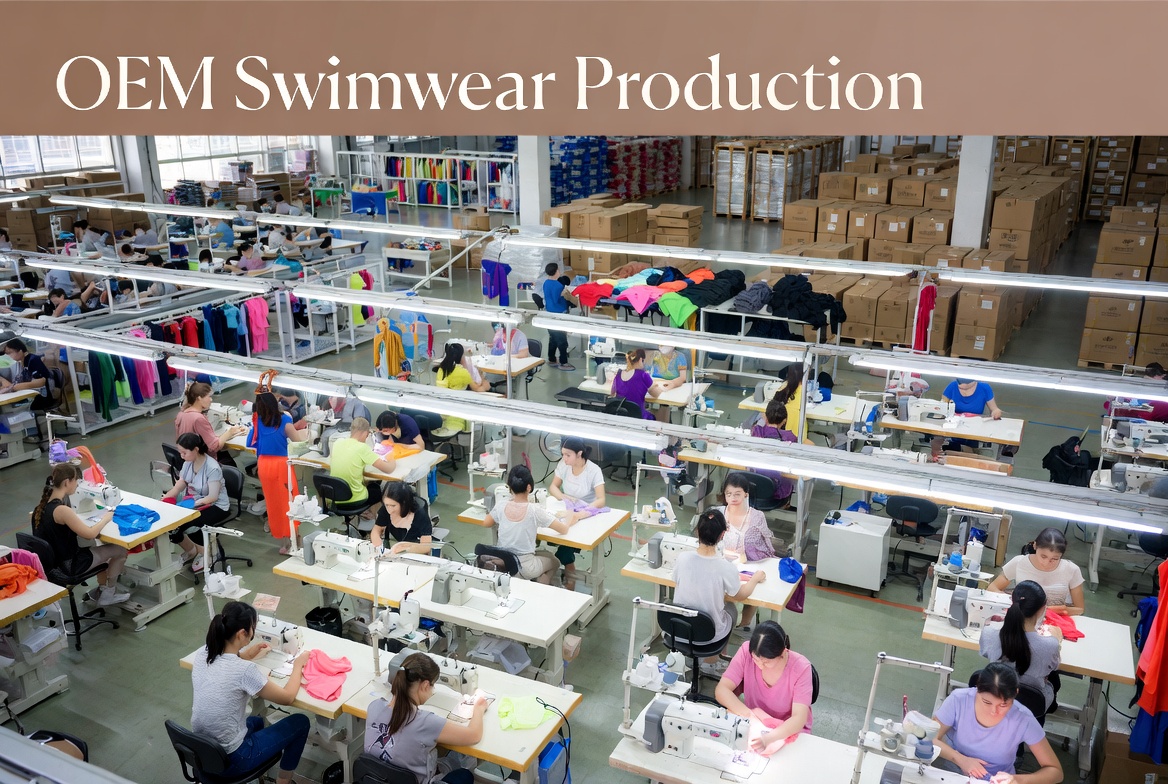
Industry reports on France's swimwear trade show that imports centre around a handful of key exporting countries—particularly Tunisia, Italy, Bangladesh, and China. This reflects a mix of proximity sourcing (Tunisia/Italy) and cost‑effective, large‑scale manufacturing (Bangladesh/China). [6wresearch]
For procurement managers, the practical implication is that many "French" labels rely on cross‑border OEM/ODM networks rather than purely local French factories. When shortlisting suppliers, it is often efficient to prioritise factories located in those core exporting countries that already have experience shipping to France, as they will be familiar with French retailers' logistical and technical requirements. [6wresearch]
Below is an indicative comparison of selected suppliers based on publicly available information and typical industry patterns. Always confirm data directly with the factory before finalising contracts. [grandviewresearch]
| Supplier | Typical monthly capacity | Indicative MOQ per style | Reported/typical audits & certifications |
|---|---|---|---|
| Active Wear Productions (OEM) | ≈200,000 pcs (standard) (activewearproductions) | ≈800 pcs/style & colour (activewearproductions) | BSCI, SEDEX (factory‑level) (activewearproductions) |
| Tex Garment Zone – Swimwear | Mid‑ to high volume (tgzuniform) | Negotiable, bulk‑oriented (tgzuniform) | BSCI, SEDEX, WRAP (tgzuniform) |
| Dongguan Yongting Clothing Co., Ltd. | ≈200,000 pcs/month (grandviewresearch) | Flexible, SME‑friendly (discuss at RFQ) (grandviewresearch) | Works with major audited retailers (grandviewresearch) |
| B'SWIM (France) | Design‑driven, smaller runs (tgzuniform) | Varies; often brand/collection‑based (tgzuniform) | Focus on fashion; formal audits less public (tgzuniform) |
| Aquasphere / Zoggs | Brand‑driven volumes (tgzuniform) | Not public; brand‑specific (tgzuniform) | Operate under major‑brand compliance regimes (tgzuniform) |
This table should be used as a starting point when you reach out for RFQs: request updated capacity calendars, MOQ policies by fabric/print, and proof of recent audits. [activewearproductions]
One frequent issue is suppliers substituting lower‑grade fabrics or thinner linings than those approved in the original samples, which can lead to transparency, early pilling, or loss of elasticity. To manage this risk, insist on fabric lot approval before bulk production, including GSM checks, stretch/recovery tests, and colour‑fastness reports. [grandviewresearch]
Swimwear sizing is unforgiving: small mis‑grades can create fit issues between sample and bulk or across size curves. Always review graded spec sheets, request size‑set samples, and arrange a fit session on real fitting models for key sizes before sealing the bulk order. [activewearproductions]
Some factories may accept overlapping orders beyond their realistic capacity, leading to delays or quality shortcuts. Ask for a capacity calendar, clarify the maximum lines allocated to your order, and tie delivery dates to contractual penalties or at least negotiated discounts in case of major delays. [grandviewresearch]
Issues such as unapproved subcontracting, non‑compliant chemical usage, or expired audits can create serious brand risk, especially for EU‑bound goods. Require visibility on the full supply chain (including dye houses and printing units) and request current certificates and lab test reports before confirming bulk orders. [gabrielregistrar]
One less‑discussed but widespread practice in the industry is the "silent subcontracting" of overflow orders to small, unapproved workshops when factories are overloaded. On paper, your order is produced in a fully audited facility; in reality, part of the production may be shifted to a smaller unit with weaker controls, especially during peak season. [activewearproductions]
To detect and prevent this:
- Insist on unannounced or third‑party inline inspections at critical production stages, not just final inspections. [qmsuk]
- Include in your contract that subcontracting requires written approval and that all subcontractors must meet the same audit and quality requirements.
- Monitor continuity of workmanship; sudden changes in stitching quality, label placement, or fabric hand‑feel across different batches of the same order can signal unauthorised outsourcing. [grandviewresearch]
This level of control is especially important when working with high‑volume orders in price‑sensitive segments heading to major European retailers or French chains. [6wresearch]
For swimwear suppliers targeting France and the EU, buyers frequently require ISO‑style quality systems and social compliance schemes such as BSCI, SEDEX, or WRAP. However, certificates can be outdated or, in the worst cases, misused. [activewearproductions]
To verify them:
1. Request full copies of all certificates, including certificate numbers, scope, and expiry dates. [gabrielregistrar]
2. Visit the issuing certification body's website (or their verification portal) and use the certificate number to confirm validity, scope, and status. [qmsuk]
3. Cross‑check that the certification body itself is accredited by recognised national or international accreditation organisations. [gabrielregistrar]
4. Repeat this process periodically; for long‑term suppliers, add verification cycles into your vendor management schedule (for example, every 12 months). [qmsuk]
This process reduces the risk of relying on outdated or misleading documentation and aligns with standard corporate governance practices for EU buyers. [gabrielregistrar]
- Shortlist 3–5 suppliers based on product fit, capacity, and certifications, using public information and industry references. [6wresearch]
- Provide detailed technical packs (fabric, GSM, lining, trims, size range, print positions, branding) and expected order volumes to obtain realistic quotations. [grandviewresearch]
- Request fabric swatches and proto samples first, then proceed to full size sets for your primary styles. [activewearproductions]
- Conduct fit sessions on representative models and document all comments clearly; ensure the supplier updates patterns and sends confirmed "PP samples" (pre‑production samples) for approval. [grandviewresearch]
- Define MOQs per colour/style, unit prices, payment terms, and penalties for late delivery or quality deviations. [activewearproductions]
- Confirm production windows, capacity allocation, and plan inline inspections if the order value is significant. [gabrielregistrar]
- For France/EU, align with Incoterms (typically FOB or CIF) and ensure all transport documentation (packing lists, invoices, HS codes) is correct to avoid customs delays. [6wresearch]
- Check that labelling meets EU requirements (fibre content, care symbols, country of origin) before goods are packed. [6wresearch]
- Assess defect rates, returns, and customer feedback across the first season to refine specs and patterns for future orders. [grandviewresearch]
- For reliable suppliers such as Yongting, Tex Garment Zone, or audited OEM networks, move towards multi‑season frameworks and jointly developed roadmaps rather than one‑off projects. [tgzuniform]
The French swimwear market's steady growth and its role as a style reference point make it a strategic target for brands, wholesalers, and private‑label buyers. Choosing the right custom swimwear supplier—balancing technical capability, compliance, capacity, and communication—is the core determinant of long‑term success. [6wresearch]
Suppliers such as B'SWIM and Aquasphere provide France‑centric design and branding power, while industrial OEMs like Active Wear Productions, Tex Garment Zone, and Dongguan Yongting Clothing Co., Ltd. offer scalable production with structured QC and strong export experience to Europe. If you are planning to launch or expand a custom swimsuits line for the French market, your next step should be to shortlist 2–3 suppliers that match your volume and positioning, request detailed RFQs and sample sets, and pilot a limited‑volume program before committing to multi‑season frameworks. [tgzuniform]
Q1: How can I verify if a factory's ISO or BSCI certificate is still valid and not expired?
Obtain the certificate number and issuing body, then use the verification tools on the certification body's website (or corresponding accreditation portals) to check validity dates and scope. If the certificate is not listed or appears expired, treat this as a red flag and request clarification or updated audits before placing orders. [qmsuk]
Q2: What is a realistic MOQ for custom swimsuits when targeting the French mid‑market?
For industrial OEM factories, MOQs of 600–800 pieces per style/colour are common, as illustrated by players like Active Wear Productions. Flexible OEMs such as Dongguan Yongting may negotiate lower MOQs for emerging or mid‑size brands, especially if you commit to multi‑season programs. [activewearproductions]
Q3: How can I ensure my custom swimsuits meet EU chemical and safety requirements?
Work with suppliers familiar with REACH and major brand RSLs (restricted substances lists), request lab tests for dyes, elastics, and prints, and require that all finishing chemicals come from approved suppliers. Reliable OEMs supplying major EU retailers already have standard test matrices and can integrate your specific RSLs into their QC protocols. [6wresearch]
Q4: Should I prioritise proximity (e.g., Tunisia/Italy) over cost‑competitive hubs like China or Bangladesh?
Proximity sourcing can shorten lead times and improve flexibility, but unit costs tend to be higher. In practice, many brands use a hybrid strategy—reserving closer factories for urgent or fashion‑forward capsules and relying on established Chinese or Bangladeshi OEMs like Yongting or Tex Garment Zone for high‑volume, price‑sensitive programs. [6wresearch]
Q5: How do I evaluate a factory's true R&D and development capability, not just their claim?
Look at the completeness of their technical responses (pattern suggestions, grading proposals, and fabric options), ask for examples of projects with European brands, and request factory‑developed designs. Suppliers that can quickly translate a concept into a commercially viable style with clear feedback on risks and costs are generally stronger partners than those who only quote prices. [tgzuniform]


