
Views: 222 Author: Yongting Swimwear Publish Time: 2026-06-09 Origin: Site


Content Menu
● How We Evaluate High‑Quality Cover Up Suppliers
● Technical Essentials for Ladies Beach Cover Ups
● Why China Is a Strategic Hub for Ladies Beach Cover Ups
● Transparent Selection Criteria for This Top 10 List
● Top 10 Ladies Beach Cover Up Manufacturers in China (2026)
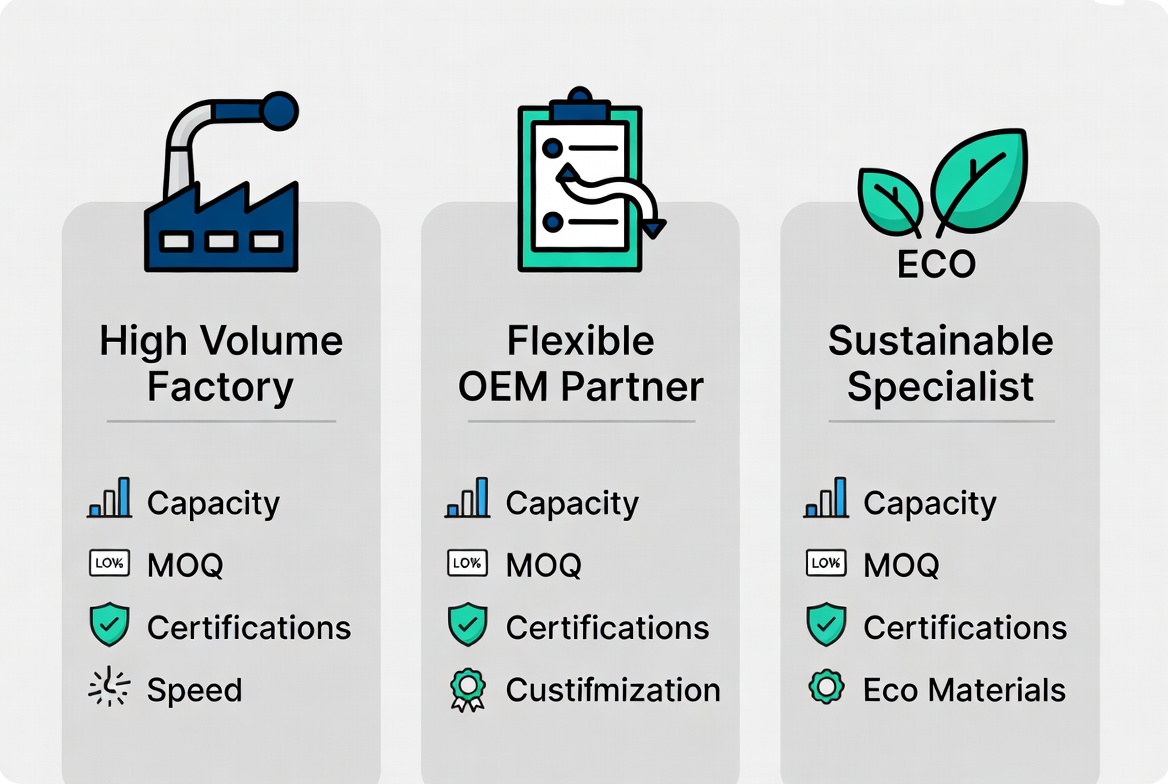
>> 1. Dongguan Yongting Clothing Co., Ltd. – Flexible OEM Partner for Small and Mid‑Size Brands
>> 2. Abely Fashion Co., Ltd. – Versatile Styling and Multi‑Category Swim
>> 3. Hongyu Apparel – Higher‑Volume, Design‑Rich Construction
>> 4. Unijoy Swimwear – Sustainability‑Focused Cover Ups
>> 5. Wisrose Garment Co., Ltd. – Value‑Tier OEM for Promotional and Entry Price Points
>> 6. Topper Swimwear – Technical and Active‑Inspired Cover Ups
>> 7. Zhongshan Enjoy Apparel Co., Ltd. – Embellished and Design‑Heavy Lines
>> 8. Yteng Sport Co., Ltd. – Functional Travel‑Friendly Cover Ups
>> 9. Appareify – Digital‑First OEM Partner for Emerging DTC Brands
>> 10. Ally Swimsuit Co., Ltd. – Multi‑Category Swim OEM With Solid Compliance
● Key Comparison: Capacity, MOQ, and Certifications
● Buyer's Guide: Practical Steps, Pitfalls, and Insider Tips
>> 1. Verifying Factory and Certifications
>> 2. Sample and Lab‑Test Workflow
>> 3. Common Pitfalls in Ladies Beach Cover Up Sourcing
>> 4. "Internal" Trap: Trim Substitution and Hidden Downgrades
>> 5. Logistics Timing and Seasonal Planning
● Conclusion and Call to Action
● FAQ – Advanced Questions Real Buyers Ask
China remains the most strategic sourcing base for ladies' beach cover ups, combining large-scale capacity, mature textile clusters, and competitive pricing that global brands struggle to find elsewhere. For procurement managers planning multi‑season programs rather than one‑off buys, choosing the right Chinese OEM partner can determine on‑time delivery, return rates, and margin performance for several years. [sinofinetex]
Before looking at specific factories, it helps to frame how an experienced sourcing team screens a "shortlist" of Chinese manufacturers. [sinofinetex]
- Factory certifications: ISO 9001 for quality systems, plus textile‑specific standards such as OEKO‑TEX, GRS, and BSCI/SEDEX for social compliance. [cottonbeachtowel]
- R&D capability: In‑house pattern rooms, digital printing partners, and the ability to translate mood boards into commercial cover up lines within 7–14 days of sampling.
- Quality control structure: Dedicated QC department, documented AQL procedures, and pre‑shipment inspection routines for each order. [qualityinspection]
- Capacity and lead time: Monthly output above 50,000 pieces and stable 30–60‑day lead times from deposit to shipment for standard styles.
- OEM/ODM depth: Ability to support tech packs, grading, branding, packaging, and compliance documents for EU/US markets, not just basic CMT. [sinofinetex]
- Communication and project management: English‑speaking merchandisers, transparent costing, and proactive risk warnings when schedules or materials change.
Ladies beach cover ups are no longer simple "add‑on" sarongs; large retailers treat them as margin‑rich, trend‑sensitive products with specific technical requirements. [datainsightsmarket]
- Material classes: Common fabrics include lightweight chiffon and georgette (polyester), viscose/rayon, cotton gauze, nylon‑spandex blends, and newer recycled fibers like ECONYL. [hwgarment]
- Fabric weight (GSM): Typical ranges are 120–180 GSM for airy resort pieces and 160–220 GSM for opaque shirt‑dresses or tunics.
- Performance factors: Colorfastness to chlorine and seawater (min. Grade 4), UV and light fastness (Grade 4–5), and shrinkage control under 3% after washing are becoming default requirements for major retailers. [datainsightsmarket]
- Compliance standards: While CE/RoHS apply mainly to electrical/chemical products, cover ups more often rely on OEKO‑TEX Standard 100 (chemical safety), REACH conformity for EU, and GRS certification where recycled content is claimed. [cottonbeachtowel]
- Sustainability: Global reports project the luxury and premium beach cover up segment to grow at around 6–8% CAGR to 2033, with sustainable materials and traceable supply chains as key purchasing drivers for EU/US consumers. [verifiedmarketreports]
China's textile clusters in Guangdong, Zhejiang, and Liaoning are tightly integrated with knitting, dyeing, printing, and garment factories, which shortens sampling time and improves consistency for seasonal cover up programs. [sinofinetex]

China is estimated to produce a significant majority of the world's swimwear and related accessories, with coastal hubs such as Xingcheng alone outputting hundreds of millions of pieces annually. For cover ups, this translates into both scale and specialization in printing, embroidery, and light‑weight garment construction. [sinofinetex]
Chinese manufacturers offer several structural advantages:
- Mature industry clusters: Dongguan/Guangzhou for fashion‑driven resort wear; Zhejiang/Jiangsu for large‑scale woven and knitted fabrics; Liaoning (Xingcheng) for swimwear ecosystems. [sinofinetex]
- Integrated supply chains: Vertical or semi‑vertical setups that cover fabric development, digital printing, cutting, sewing, and packing under coordinated management.
- Export know‑how: Experience with documentation, testing, and retailer compliance manuals for major chains in Europe, North America, and Australia. [verifiedmarketreports]
For buyers, this ecosystem means faster iterations, strong price competition, and more options at each price tier—from value retailers to premium resort brands. [verifiedmarketreports]
The factories below are framed specifically from the perspective of procurement managers looking for medium‑ to long‑term OEM partners in ladies beach cover ups.
Key evaluation dimensions
- Export focus and history in swimwear/cover ups
- Capacity and MOQ thresholds relevant to brands at different stages
- Certification and compliance transparency
- OEM/ODM service scope (design, grading, packaging, lab testing support)
- Communication efficiency and ability to support small to mid‑size brands, not only giants
Where public data was limited, factories are described by typical positioning in China's swimwear and beachwear sector; readers should still conduct their own audits and verification before issuing POs. [sinofinetex]
Dongguan Yongting Clothing Co., Ltd. is an experienced OEM/ODM swimwear specialist in Guangdong with over 15 years in the apparel sector and a 3,000 m² facility employing nearly 200 workers. The factory's monthly capacity reaches around 200,000 pieces across women's swimwear, men's/children's swim, wetsuits, and beach cover ups. [hwgarment]
For buyers, Yongting's core value lies in its balanced positioning: strong enough to service international retailers, but still flexible on MOQs and customization for emerging brands and niche labels. The factory has worked with major global retailers such as Lidl, Target, H&M, Oysho, Zara, and Decathlon, demonstrating consistent quality under strict brand standards. [hwgarment]
Key strengths for cover up projects:
- 12 specialized departments, including design, QC, and logistics, allowing tight project control from tech pack to shipment. [hwgarment]
- Access to premium Italian Carvico fabrics, Japanese nylon‑spandex blends, and sustainable options like ECONYL, which is attractive for brands building eco stories around matching swim + cover ups. [hwgarment]
- Willingness to support mid‑size MOQs (often from 500–1,000 pcs per style depending on complexity) and to collaborate closely on fits, trims, and packaging.
For small and mid‑size brands that need both technical guidance and responsive communication, Yongting is a realistic partner for gradually scaling seasonal cover up ranges rather than betting everything on a single large factory. [hwgarment]
Abely Fashion is a well‑known swimwear OEM/ODM manufacturer offering ladies, men's, and kids' swim, with strong experience in light woven and knitted cover ups. The company's design teams are used to working from reference samples, mood boards, and trend reports to generate new kimono, kaftan, and tunic silhouettes every season.
Abely is particularly suitable for brands that need broad collections with a mix of simple chiffon pieces and more detailed shirt‑dresses within one supplier. Their core competencies include digital printing coordination, lace and crochet trims, and retail‑ready packaging for department‑store clients. [sinofinetex]
Hongyu Apparel focuses on mid‑ to high‑volume production, ideal for established brands and retailers that already have proven sell‑through in beach cover ups. The factory handles more complex constructions, including multi‑panel designs, laser‑cut details, and multi‑fabric combinations that lift average selling prices.
They usually work with higher MOQs but offer predictable capacity and structured production planning, which suits chain retailers locking in volume programs 6–12 months ahead. Inventory programs for key fabrics can help shorten re‑order cycles when a particular cover up style over‑performs in season. [sinofinetex]
Unijoy Swimwear positions itself around sustainable materials for swimwear and related categories, including ladies cover ups. They integrate GRS‑certified recycled polyester and nylon into production and emphasize traceability, which aligns with retailer ESG requirements. [datainsightsmarket]
Beyond fabrics, Unijoy supports additional technical finishes such as moisture wicking, quick‑dry, and anti‑odor treatments that extend the use of cover ups beyond beach scenarios. This makes them attractive to brands that want to market "multi‑use resort layers" suitable from pool to city. [verifiedmarketreports]
Wisrose operates at a competitive‑pricing tier, focusing on straightforward styles for volume‑driven customers like supermarket chains, discount retailers, and promotions. Their strengths lie in streamlined production and cost‑efficient FOB quotes rather than intensive design co‑development.
Brands can leverage Wisrose for basic mesh or chiffon cover ups, beach shirts, and pareos where the priority is price and reliable quality, not complex detailing. The trade‑off is typically higher MOQs, but the landed cost can significantly improve margin structures at entry price points. [sinofinetex]
Topper Swimwear bridges swimwear and activewear, offering cover ups made from four‑way stretch, quick‑dry, and chlorine‑resistant performance fabrics. Popular silhouettes include zip‑front hoodies, performance tunics, and sporty dresses that match with swim leggings or rash guards.
For athleisure and modest swim brands, Topper can provide consistent grading across broad size ranges, including plus sizes, which is a recurring challenge with more fashion‑oriented factories. Buyers seeking performance‑oriented cover ups for resort, cruise, and water‑sport segments should consider them.
Enjoy Apparel, based in Zhongshan, combines basic garment manufacturing with in‑house or closely integrated embellishment services such as embroidery, beadwork, and sequins. This is useful for premium resort brands that want limited runs of special pieces without outsourcing decoration to separate subcontractors.
They also support photography and packaging services for online‑first brands, providing ready‑to‑use white background and basic lifestyle imagery that can speed up listing creation for e‑commerce channels.
Yteng Sport focuses on sporty and travel‑friendly designs, with packable fabrics, pockets, and adjustable details like drawstrings and roll‑up sleeves. Their products are popular with brands that market cover ups as multi‑functional travel garments rather than purely beachwear.
Yteng's transparent cost breakdowns are helpful for buyers who need to hit specific shelf prices and may want to "value engineer" trims, fabrics, or construction details. Regular capacity forecasts make them easier to integrate into long‑term planning across seasons.
Appareify targets direct‑to‑consumer brands and smaller online labels with relatively lower MOQs and a digital communication model. They support video calls, online approvals, and digital tracking of sample and bulk stages, which is useful for distributed teams.
For ladies beach cover ups, Appareify offers trendy materials such as crochet knits, tie‑dye, and openwork patterns that align with social‑media‑driven aesthetics. Their white‑label options can also be attractive for boutiques wanting to test private labels with minimal initial investment. [verifiedmarketreports]
Ally Swimsuit provides broad OEM coverage across men's, women's, and kids' swim and related products, including cover ups. Their core value is pragmatic OEM execution with attention to documentation, AQL‑based inspections, and logistics partnerships that support consolidated shipments. [qualityinspection]
For buyers consolidating multiple swim categories in one supplier base, Ally can simplify freight and coordination while still allowing segmentation of product tiers through different constructions and trims.
Below is a simplified comparison based on typical positioning and publicly available or industry‑typical data; always confirm details directly with each factory before final decisions. [cottonbeachtowel]
Table: Snapshot of Major Manufacturers for Ladies Beach Cover Ups
| Manufacturer | Approx. Monthly Capacity | Typical Starting MOQ (per style) | Notable Certifications / Focus | Best Fit Buyer Type |
|---|---|---|---|---|
| Dongguan Yongting | ~200,000 pcs (hwgarment) | 500–1,000 | OEM/ODM swim specialist, supports eco fabrics (hwgarment) | Small–mid brands, retailers testing ranges |
| Abely Fashion | 150,000+ pcs | ~1,000 | Multi‑category swim, fashion design support | Mid‑tier brands and chain stores |
| Hongyu Apparel | ~180,000 pcs | 1,500+ | Complex construction, volume programs | Established retailers |
| Unijoy Swimwear | ~100,000 pcs | 800–1,000 | GRS / recycled, sustainability focus (datainsightsmarket) | Eco‑driven brands |
| Wisrose Garment | ~120,000 pcs | 1,200+ | Value pricing, basic eco options | Supermarkets, value retailers |
| Topper Swimwear | ~90,000 pcs | 600–1,000 | Performance fabrics, plus‑size expertise | Active / modest swim brands |
| Zhongshan Enjoy Apparel | Medium scale | 800–1,200 | Embellishments, photo & packaging support | Resort / premium capsule collections |
| Yteng Sport | Medium scale | 600–1,000 | Travel/functional styles, cost transparency | Travel / outdoor retailers |
| Appareify | Flexible, growing | 300–500+ | Digital‑first, lower MOQs, trendy materials | DTC startups and online brands |
| Ally Swimsuit | High volume | 1,000+ | AQL‑aligned QC, multi‑category swim (qualityinspection) | Chains consolidating categories |
- ISO 9001 and other certificates: Request a clear PDF, check scope, dates, and factory address, then validate via CNAS/IAF or the certification body's official website. [chinacheckup]
- Insider tip: Frequent registrar changes (every 1–2 years) can signal that the factory is "shopping" for easier audits; it does not automatically disqualify them, but warrants a closer QA review. [qualityinspection]
- Check business license: Confirm that the company is registered as a manufacturer (with processing/production scope), not purely a trading company.
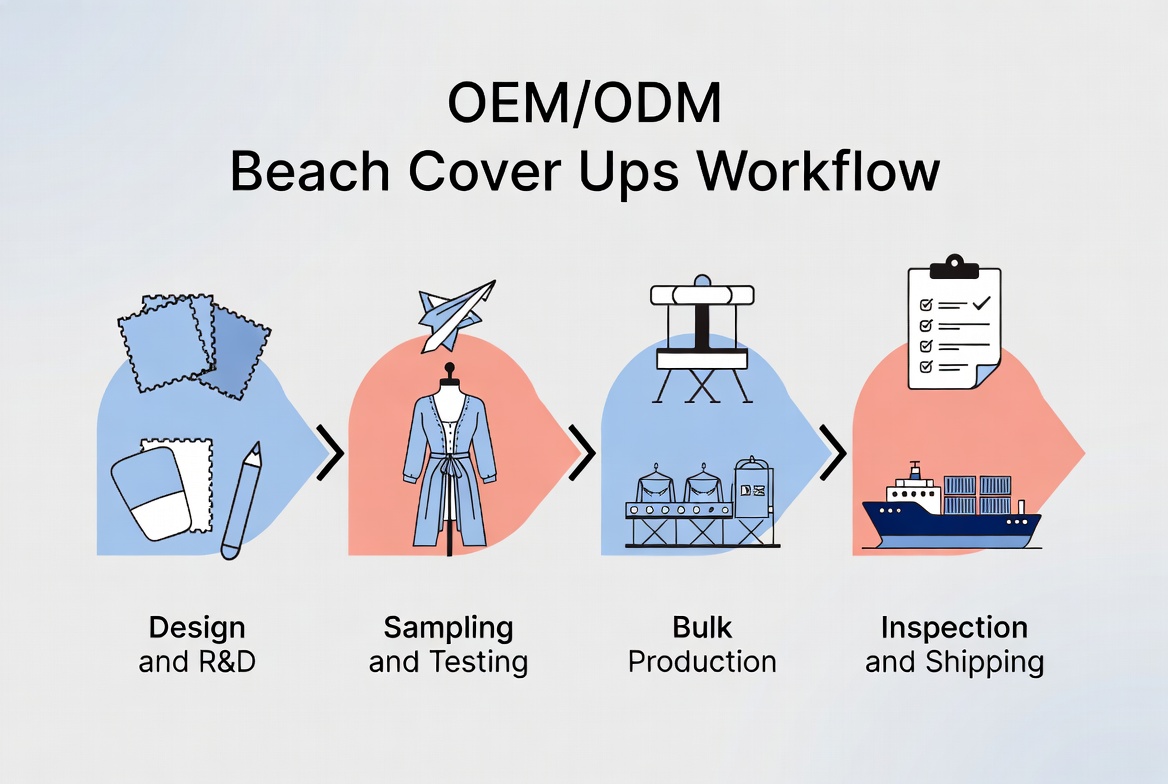
A robust sampling and testing routine reduces risk of mass‑production surprises:
1. Development sample – tests design interpretation and construction.
2. Pre‑production sample – uses bulk fabrics and trims for final spec alignment.
3. Golden sample – kept by both sides as the reference for bulk inspection.
4. Size set – checks grading for critical sizes like S, M, L, XL. [sinofinetex]
For key programs, send cover ups for colorfastness, shrinkage, and seam‑strength testing at third‑party labs (e.g., SGS, ITS, BV) before approving bulk. [qualityinspection]
- Fabric downgrade: Using lighter or cheaper fabric than the approved sample to save cost, affecting drape and opacity. Mitigation: specify GSM tolerance and test random rolls. [qualityinspection]
- Print quality variance: Bulk prints arriving duller than development samples due to different printers or color profiles. Mitigation: demand strike‑offs from production printer and keep approved swatches.
- Stitch density and seam slippage: Lower SPI (stitches per inch) on side seams and armholes can cause seam opening on lightweight fabrics. Mitigation: define minimum SPI and test samples with pull tests.
A less discussed but quite common issue is unauthorized trim substitution: swapping branded or specified zippers, buttons, cords, or beads for cheaper generic options during bulk production. This can hurt perceived value and even cause functional failure (rusted eyelets, broken toggles).
Mitigation strategies:
- Include trim brand/model codes and photos in the purchase contract.
- Require pre‑production samples with final trims, not "equivalents."
- Schedule at least one in‑line inspection before full packing to spot any substitution early. [qualityinspection]
Production for spring/summer cover ups often peaks from January to March, overlapping with Chinese New Year shutdowns that can last 2–3 weeks. Typical timelines for a new style—from deposit to ex‑factory—are 45–60 days, excluding shipping.
For ocean freight, add around:
- 15–20 days to major North American ports.
- 25–35 days to key European ports, depending on routing. [verifiedmarketreports]
Plan to lock in main PO quantities at least 90 days before required in‑store dates around major holidays to avoid capacity bottlenecks.
Ladies beach cover ups are a fast‑moving, margin‑rich category that rewards precise supplier selection, tight technical control, and disciplined logistics planning. China's mature swimwear and textile clusters make it the logical base for both emerging and established brands, provided that sourcing teams rigorously verify factories, certifications, and sampling processes. [datainsightsmarket]
The manufacturers highlighted here—including flexible OEM/ODM specialists like Dongguan Yongting Clothing Co., Ltd.—offer distinct strengths in capacity, sustainability, design support, and MOQ flexibility to match different growth stages and positioning strategies. As a next step, short‑list 2–3 factories that fit your volume and positioning, run structured sample projects, and then scale with the partner that shows consistent quality, transparent communication, and on‑time delivery. [hwgarment]
1. How can I check if a factory's ISO 9001 certificate is still valid and relevant to cover ups?
Ask for the full PDF, verify certificate number, issue and expiry dates, and product scope (ensure apparel/swimwear or similar is stated), then cross‑check the certification body via CNAS/IAF websites or directly on the registrar's own site. If the scope only covers "textile trading" or a different site address, treat this as a red flag and request explanation. [chinacheckup]
2. What MOQ is realistic for ladies beach cover ups when testing a new collection?
For woven or knitted cover ups, many Chinese factories will quote MOQs between 500 and 1,000 pieces per style depending on print, fabric, and trimming complexity. Some digital‑first or mid‑size factories may agree to mixed‑style MOQs (e.g., 2,000 total pieces across 3–4 styles), which is often the best compromise for new brands. [sinofinetex]
3. How do I verify claims about recycled or ECONYL fabrics in my cover ups?
Request GRS certificates or ECONYL transaction documents issued to the fabric mill and check that the mill appears in Textile Exchange or ECONYL‑related listings rather than relying solely on the garment factory's statements. For large programs, consider random fabric testing and supplier chain‑of‑custody audits. [cottonbeachtowel]
4. Which payment terms best balance risk for first‑time cooperation?
Common practice is 30% deposit and 70% before shipment after pre‑shipment inspection, sometimes using trade assurance or escrow for larger orders. Avoid 100% prepayment until the factory has proven performance over at least one or two successful cycles. [qualityinspection]
5. How can I tell if I'm dealing with a true factory or a trading company posing as a manufacturer?
Request the business license, check if the registered scope includes manufacturing, ask for a live video tour showing cutting and sewing lines with visible factory signage, and confirm company domain emails instead of generic free accounts. Inconsistent answers, reluctance to show production floors, or constantly changing production locations are indicators of intermediary involvement. [qualityinspection]


