
Views: 222 Author: Yongting Swimwear Publish Time: 2026-05-19 Origin: Site


Men's swimwear has transformed from heavy wool one‑pieces to lightweight, performance-driven trunks designed for comfort, confidence, and style at the beach or pool. Drawing on our experience as an OEM men's swimwear manufacturer at Yongting, this guide looks at how men's swimwear evolved, what today's buyers actually care about, and how brands can choose the right trunks that customers will love. [maamgic]
For much of history, men simply swam naked, especially in rivers, lakes, and private bathhouses, so there was little need for dedicated "swimwear." Once public seaside bathing and mixed‑gender beaches became popular in the late 19th and early 20th century, modesty and public decency laws began to shape the first real men's swimsuits. Today, men's swim trunks have become a technical garment that blends fabric innovation, fit engineering, and fashion trends in a way our great‑grandfathers would barely recognize. [lsdigital]

Before the 19th century, most cultures did not have a dedicated concept of "men's swimwear"; men bathed or swam without clothing unless strong social or religious rules required covering the body. Where garments were used, they were often simple linen or cotton shorts, more like undergarments than performance swimwear.
- Public bathing was usually single‑sex, which reduced the pressure for modest swimwear.
- Swimming was functional – washing, ritual bathing, or work – rather than leisure.
- There was no specialized fabric designed to handle water, weight, or drying time.
This background explains why true "men's swimwear" only starts to appear once seaside holidays and mixed public beaches become normal.
By the 1920s, men in Western countries were expected to cover their upper bodies at public beaches, leading to the classic one‑piece wool swimsuit that ran from the shoulder to above the knee. These early swimsuits were often dark, thick, and extremely heavy when wet, sometimes weighing several kilograms and making swimming difficult.
> It was even illegal for men to go shirtless at many beaches in the early 1900s, and fines or removal from the beach were common until laws eased in the 1930s.
Key characteristics of 1920s men's swimwear:
- One‑piece design with shoulder straps and attached shorts
- Wool or wool‑blend construction, which absorbed large amounts of water
- Limited color choice, typically navy, black, or dark stripes
- More focus on modesty and regulation than comfort or performance
As beach culture exploded between the 1930s and 1960s, men pushed back against strict dress codes, and laws gradually allowed them to go shirtless in public. At the same time, textile innovation introduced nylon and spandex, allowing designers to replace bulky wool garments with lighter, more fitted briefs and shorts. [dessue]
Early swim shorts in the first half of the 20th century were still boxy and prone to sagging, especially when wet. They absorbed water, took a long time to dry, and often needed a belt or drawstring to stay in place, which made serious swimming difficult.
The shift from wool to synthetic fibers brought several advantages: [baliswim]
- Faster drying and less water absorption
- Improved elasticity and better shape retention
- The ability to create bolder colors and prints
- More comfortable, skin‑friendly linings
By the 1960s and 1970s, tight‑fitting swim briefs and shorter trunks became mainstream in many markets, especially Europe and competitive swimming.
Starting in the 1980s, men's swimwear became more daring, with shorter inseams, tighter fits, and brighter colors. Influenced by surf culture, fitness trends, and pop media, brands experimented with neon tones, bold patterns, and athletic cuts that allowed easier movement in the water. [gq]
Typical features of 1980s–2000s swimwear trends: [maamgic]
- Higher hemlines and snug fits that emphasized physique
- Color‑blocked designs, neon accents, and graphic prints
- Growing popularity of elastic waistbands and internal mesh liners
- Clear differentiation between performance swim briefs and casual trunks
For many men, this era is when swimwear stopped being just "something you wear in the water" and became a fashion statement that expresses personality.
Today's men's swim trunks are defined by a combination of technical fabric, thoughtful construction, and refined style. Most popular silhouettes use mid‑to‑short inseams, quick‑dry materials, and soft linings to deliver all‑day comfort from the beach to the bar. [gq]
Modern premium trunks often include:
- Lightweight polyester, nylon, or recycled fabrics with water‑repellent finishes [baliswim]
- Soft mesh or compression liners to prevent chafing and provide support [maamgic]
- Practical features like zip pockets, key loops, and secure back pockets for valuables
- Elastic waistbands combined with drawstrings for a secure fit in and out of the water [gq]
As one industry trend report notes, short swim trunks with 4–5 inch inseams, retro prints, and silky compression linings are some of the strongest style directions for 2026. [dessue]
From an OEM manufacturer's point of view, understanding the main silhouettes helps brands order collections that match their audience.
Swim briefs are minimal, body‑hugging trunks that provide low drag in the water and a bold, athletic look. They are common in competitive swimming and in regions where fitted cuts are culturally accepted. [gq]
Best for:
- Performance swimmers and water sports
- Men who want maximum mobility and minimal fabric
- Brands targeting fitness or European‑influenced markets
Mid‑length trunks, usually with a 5–7 inch inseam, are now the most versatile style for modern consumers. They offer enough coverage for comfort while still appearing sharp and contemporary at the beach, resort, or pool party. [maamgic]
Key features:
- Elastic waistband with internal drawcord
- Soft mesh or compression liner
- Quick‑dry technical fabric
- One or more secure pockets
Board shorts originated in surf culture and typically have an 8–10+ inch inseam, sometimes reaching the knee. They may be unlined and cut slightly looser, which can appeal to modest customers or surf and skate communities. [gq]
However, we increasingly see brands switching from heavy, long board shorts to lighter, above‑the‑knee options to meet current fashion preferences. [dessue]
From the manufacturing side, fabric choice is one of the biggest factors determining product quality, customer satisfaction, and return rates. As an OEM factory, we see consistent patterns in how buyers react to different materials.
Modern men expect their swim trunks to dry quickly, feel light, and resist sagging when wet. Fabrics like high‑density polyester, nylon blends, and advanced polyamide with water‑repellent coatings help trunks shed water and maintain shape. [baliswim]
Benefits of quick‑dry fabrics: [baliswim]
- Less cling and discomfort when leaving the water
- Reduced risk of chafing and skin irritation
- More practical for travel and resort wear (swim, rinse, and go)
Traditional rough mesh liners are one of the most common complaints among men who dislike standard trunks. New designs using silk‑smooth compression liners or softer mesh dramatically improve comfort, especially during all‑day wear. [maamgic]
As manufacturers, we recommend brands consider:
1. Upgrading to softer, anti‑chafe mesh or compression fabrics.
2. Testing liner patterns on different body types to reduce pressure points.
3. Offering liner and no‑liner options in key markets based on feedback.
Sustainability is no longer a niche concern; many consumers actively search for swimwear made from recycled plastics or eco‑certified fabrics. For brands, working with an OEM that can source recycled polyester (rPET) or other sustainable materials is now a strong selling point. [ranktracker]
Eco‑focused swimwear can emphasize:
- Fabric made from recycled bottles or ocean‑bound plastic
- Lower‑impact dyeing and finishing processes
- Durable construction that extends garment life
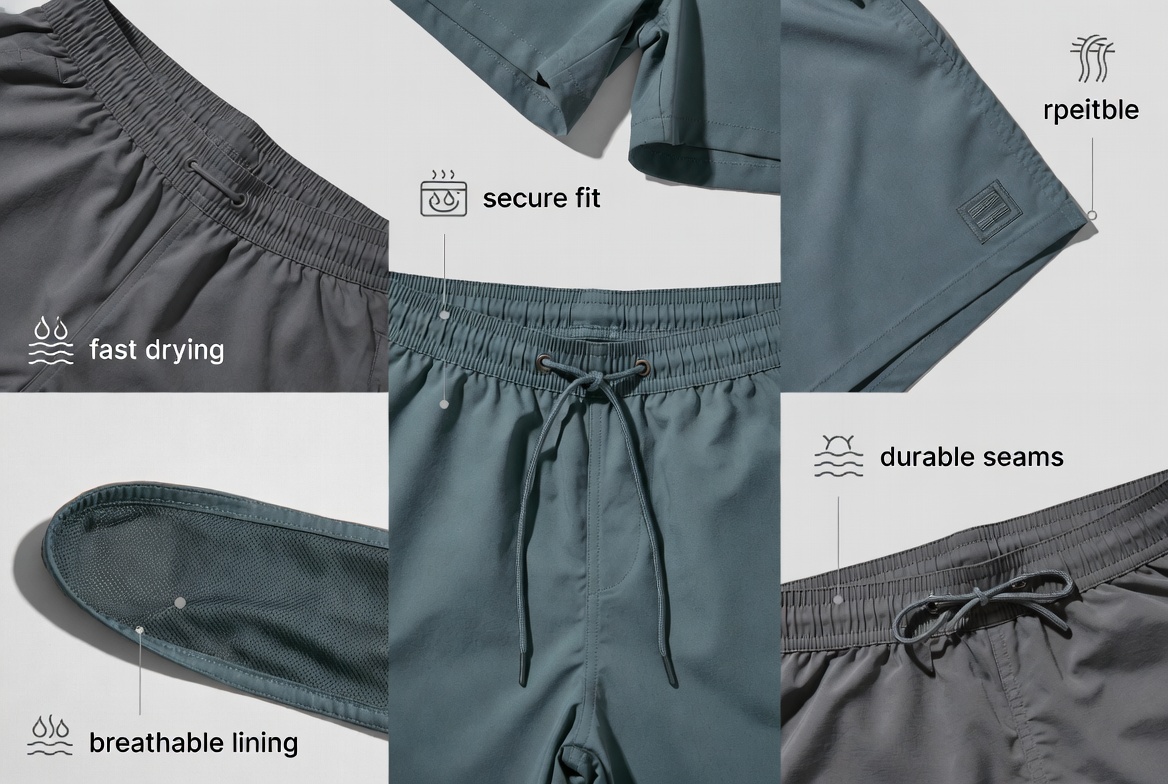
Industry studies and user feedback show that men usually prioritize fit, comfort, and practicality over pure fashion when buying swim trunks. Style matters, but if the waistband digs in, the liner chafes, or pockets feel unsafe, they will not repurchase. [ranktracker]
Common decision factors:
- Fit & length – Does it suit their height, build, and confidence level?
- Comfort – Soft waistbands, non‑scratchy liners, and light fabric are key.
- Functionality – Secure pockets, quick drying, and easy care.
- Style – Solid colors vs. prints, retro vs. modern, brand identity.
From our OEM experience, trunks that balance a modern, slightly shorter silhouette with high comfort and subtle, on‑trend prints tend to become bestsellers for our international clients. [yong-ting]
This section is designed to be directly useful for brand owners, wholesalers, and designers who need to brief a manufacturer.
Ask yourself:
1. What age range are you selling to?
2. Are they more conservative or fashion‑forward?
3. Are they using trunks mainly for travel, casual beach days, or water sports?
For example, a surf‑inspired brand might choose longer, drawstring board shorts with bold prints, while a premium resort label might prefer mid‑length tailored trunks in muted, elegant colors. [ranktracker]
A practical rule of thumb:
- 4–5 inch inseam – Trend‑driven, retro, and fashion‑forward markets [dessue]
- 5–7 inch inseam – The most universally flattering length for global audiences [gq]
- 8+ inch inseam – For surf, streetwear, or conservative segments
Brands should sample multiple inseams and test them on real users before finalizing a core block.
Decide on your fabric and lining strategy:
- Standard quick‑dry polyester with soft mesh liner – Good value, mass market.
- Premium polyamide or nylon with advanced coatings – Higher feel and performance. [dessue]
- Recycled polyester (rPET) with marketing support – For eco‑focused positioning. [baliswim]
- Compression liner shorts instead of mesh – For maximum comfort and support. [maamgic]
Small functional upgrades can strongly differentiate your swimwear:
- Hidden zip pocket for keys or cards
- Secure back pocket with drainage eyelets
- Printed internal care labels instead of scratchy tags
- Durable bar‑tacks at stress points for longer life
Modern customers notice these touches and are more likely to leave positive reviews and repeat orders. [ranktracker]
| Swimwear type | Coverage & length | Best use case | Style message |
|---|---|---|---|
| Swim briefs | Minimal, high-cut | Competitive swim, athletic beachgoers gq | Sporty, confident, performance-driven |
| Short trunks (4–5 in) | Above mid-thigh | Trendy resorts, younger markets maamgic | Fashion-forward, retro-inspired |
| Mid trunks (5–7 in) | Mid-thigh | General beach, travel, resorts gq | Balanced, modern, versatile |
| Board shorts (8–10 in) | Knee-length or longer | Surf, skate, modest wear gq | Relaxed, casual, surf-culture |
This table helps readers quickly decide which direction fits their customer base.
Working with an experienced OEM partner allows you to move from concept to finished product quickly while maintaining consistent quality. Based in Dongguan, China, our Yongting team has produced custom men's swimwear for international brands, wholesalers, and private labels across multiple markets. [yong-ting]
As an OEM swimwear factory, we typically help with:
- Pattern development and grading for different sizes and fits
- Sourcing of performance, recycled, or premium fabrics
- Custom prints, logos, and branding details
- Quality control, bulk production, and packaging
If you are developing your first collection, starting with 1–2 core trunk styles and then expanding based on customer feedback is often the safest, most cost‑effective strategy. [wpduckling]
Looking ahead to 2026 and beyond, several clear trends are shaping the next generation of men's trunks.
- Shorter inseams and retro silhouettes continue to grow, especially in Western markets. [dessue]
- Comfort‑driven details like compression liners and ultra‑soft waistbands are replacing scratchy, traditional mesh. [maamgic]
- Sustainable materials and transparent supply chains are moving from "nice‑to‑have" to "must‑have" for many brands. [ranktracker]
- Digital‑native brands are using data and reviews to refine fit blocks quickly season by season. [wpduckling]
For OEM partners like us, that means investing in updated patterns, better liners, and stable, certified fabric supply so that clients can meet these expectations reliably.
Men's swimwear has evolved from heavy wool uniforms into light, technical garments that can express personality and withstand daily beach life. If you are building or expanding a men's swimwear line, choosing the right fabric, fit, and manufacturing partner is the difference between a one‑season experiment and a long‑term, profitable category. [ranktracker]
If you need OEM support for custom men's swim trunks – from pattern development and fabric selection to bulk production – you can contact Yongting Swimwear to discuss your project, request samples, or start preparing your next collection. [yong-ting]

1. Why did early men's swimwear cover so much of the body?
Early public beach regulations emphasized modesty, and it was even illegal for men to go shirtless in many places until the 1930s, so one‑piece suits with shoulder straps were standard.
2. What made nylon and spandex so important for swimwear?
Nylon and spandex allowed manufacturers to move away from heavy wool toward lighter, stretchy fabrics that dry faster, keep their shape, and provide a more comfortable, body‑conscious fit. [baliswim]
3. Are shorter swim trunks just a fashion trend or here to stay?
Current research and style guides indicate that 4–5 inch inseams and retro cuts are part of a broader shift toward tailored, versatile resort wear, suggesting they will remain strong beyond a single season. [dessue]
4. Do customers really notice the difference between mesh and compression liners?
Yes, reviews and feedback consistently show that scratchy mesh is a common complaint, while soft, compression‑style liners significantly improve comfort and encourage repeat purchases. [ranktracker]
5. How can a new brand start a men's swimwear line with limited budget?
Most small brands begin with one or two core trunk styles, focus on a clear target customer, choose dependable quick‑dry fabrics, and partner with an OEM factory that can handle smaller initial runs and provide pattern support. [yong-ting]
1. Tucann. "The Evolution of Men's Swimwear." [https://www.tucann.com/blogs/news/the-evolution-of-mens-swimwear]
2. Maamgic. "Top 6 Men's Swimwear Trends for 2026 – Summer." [https://maamgic.com/blogs/news/top-6-mens-swimwear-trends-2026-summer] [maamgic]
3. Dessue. "Men's Swimwear 2026: A Trend That Started in 2012." [https://www.dessue.com/blog/men-s-swimwear-2026-a-trend-that-started-in-2012] [dessue]
4. Ranktracker. "Content Marketing to Engage Your Swimwear Audience." [https://www.ranktracker.com/blog/swimwear-brand-seo] [ranktracker]
5. Bali Swim. "Mastering SEO: A Strategic Guide for Swimwear E‑commerce Success." [https://baliswim.com/seo-strategic-guide-for-swimwear-ecommerce-success] [baliswim]
6. WP Duckling. "Comprehensive Guide to SEO for E‑commerce Businesses." [https://wpduckling.com/2024/11/25/comprehensive-guide-to-seo-for-swimwear-stores-business] [wpduckling]
7. Yongting Men Swimwear – Industry News. [https://www.yong-ting.com/Industry-News-ic3346646.html] [yong-ting]
8. Yongting Men Swimwear – Swimwear Knowledge. [https://www.yong-ting.com/Swimwear-Knowledge-ic3956646.html] [yong-ting]
9. LSDigital. "E‑E‑A‑T Guidelines 2025: How to Build Google‑Friendly Content." [https://www.lsdigital.com/blog/e-e-a-t-guidelines-2025] [lsdigital]
10. GQ. "Best Swim Trunks for Men 2026: Editor‑Tested Picks." [https://www.gq.com/story/the-best-swim-trunks-for-men] [gq]


