
Views: 222 Author: Loretta Publish Time: 2026-03-08 Origin: Site


Content Menu
● What Is Swimwear Stitching and Why It Matters
● Overview of Main Swimwear Stitch Types
● Zigzag Stitch: Flexible Foundation for Stretch Fabrics
● Overlock Stitch: The Workhorse of Swimwear Construction
● Coverstitch: Professional Finish for Hems and Edges
● Flatlock Stitch: Maximum Comfort and Performance
● Seamless / Bonded Construction: Clean, Minimalist Aesthetics
● How Stitching Influences Durability, Comfort, and Aesthetics
● Cost, Margin, and Positioning: Using Stitching Strategically
● Choosing the Right Stitch Mix for Your Swimwear Line
● OEM Checklist: What to Specify to Your Swimwear Factory
● Quality Control Tips for Stitching
● Clear CTA: Partner with Yongting for Expert Swimwear Stitching
● FAQs About Swimwear Stitch Types
>> 1. Which stitch is best for basic bikini production?
>> 2. When should I use flatlock stitching in swimwear?
>> 3. Is seamless swimwear always better than traditional stitched swimwear?
>> 4. How can I reduce returns caused by seam failures?
>> 5. What stitching details should I include in my tech pack?
>> 6. Do I need different stitching for recycled swim fabrics?
Have you ever wondered why some swimsuits feel supportive and comfortable for many seasons, while others twist, bag out, or split at the seams after a few wears? Stitching is one of the core reasons behind that difference. For brands, wholesalers, and OEM buyers, understanding key swimwear stitch types is essential to controlling quality, performance, and margins in every collection. [baliswim]
This comprehensive guide explains the main swimwear stitch types, how each one affects comfort and durability, and what you should specify in your tech packs when working with a professional swimwear manufacturer like Yongting in China. It is designed to help you meet modern quality expectations, support premium branding. [youtube]

In swimwear, stitching does far more than hold panels together. Stitch type, density, and thread choice directly shape stretch, recovery, skin comfort, and lifespan. Because swim garments must withstand constant movement, chlorine, saltwater, UV exposure, and frequent washing, the construction demands are much higher than for casual apparel. [youtube]
Key reasons stitching is critical for your swimwear line: [maggieframestore]
- Durability: Correct stitch types and settings reduce seam failures, holes, and popped threads.
- Comfort: Flat, low‑bulk seams minimize chafing in high‑friction areas such as underarms, inner thighs, and necklines. [youtube]
- Fit and shape retention: Stretch‑compatible stitches maintain garment structure as the fabric stretches and recovers. [youtube]
- Brand perception: Clean, consistent stitching is one of the first quality cues customers notice inside and outside a garment. [baliswim]
For OEM and private‑label projects, brands increasingly specify detailed stitch requirements in tech packs and QC checklists to ensure consistency across factories, seasons, and regions. [ugawear]
Most modern swimwear is built using a combination of several stitch types rather than a single method. The main stitches you will encounter are: [baliswim]
- Zigzag
- Overlock (serger)
- Coverstitch
- Flatlock
- Seamless / bonded construction
Understanding when and why to use each gives you more control over both quality and cost.
The zigzag stitch is one of the most common and versatile stitches for stretch fabrics. It creates a back‑and‑forth pattern that elongates with the fabric instead of snapping. [baliswim]
Typical uses in swimwear:
- Attaching elastic around leg and arm openings
- Finishing edges in small‑batch runs
- Reinforcing areas that need extra stretch [maggieframestore]
Why it matters:
The zigzag stitch allows the swimsuit to move with the body while reducing the risk of popped stitches, especially in entry‑level and mid‑range products where cost control is important. [youtube]
Pros [maggieframestore]
- Highly flexible, suitable for high‑stretch nylon‑spandex fabrics.
- Works on most standard and industrial machines.
- Adaptable stitch length and width for different design needs.
Cons [baliswim]
- Less visually refined than coverstitch on hems.
- In very high‑stress areas (e.g., narrow straps) it may need reinforcement or pairing with another stitch.
For OEM buyers, zigzag is often used as a supporting stitch for elastic application, while main seams rely on overlock, flatlock, or bonding for long‑term durability. [youtube]
The overlock (serger) stitch simultaneously trims fabric edges and wraps them with thread, creating secure, neat seams. It is a workhorse stitch in nearly all industrial swimwear production. [baliswim]
Typical applications:
- Side seams, crotch seams, and shoulder or strap seams
- Joining shell and lining panels
- Clean finishing of internal edges [baliswim]
Why it matters:
Overlock stitching helps prevent fraying, supports structural integrity, and keeps the inside of the garment neat, even after repeated exposure to water and movement. [ugawear]
Pros [youtube]
- Strong, durable seams suitable for repeated stretching.
- Efficient for high‑volume OEM production lines.
- Compatible with thin, high‑stretch swim fabrics like Lycra and recycled polyamide. [baliswim]
Cons [youtube]
- Can feel bulky in multi‑layer areas if tension and thread are not optimally set.
- Not as flat or chafe‑resistant as flatlock, which can matter in performance or long‑distance swimwear.
Overlock is the backbone for many mass‑market and mid‑tier swimwear lines, often paired with coverstitch at hems for a more premium look. [baliswim]
A coverstitch creates parallel rows of stitching on the outside, with a looped structure underneath, ideal for stretchy hems and bands. It is widely used in activewear and swimwear for its clean, professional appearance. [youtube]
Where you see it:
- Leg and arm openings
- Waistbands and underband hems
- Necklines and cropped top hems [baliswim]
Why it matters:
Coverstitching holds fabric and elastic securely while preserving stretch, helping edges lie smoothly without tunneling or rolling. [maggieframestore]
Pros [maggieframestore]
- Premium look that customers associate with high‑quality sports and swim brands.
- Excellent stretch and recovery without seam cracking.
- Versatile for decorative twin‑needle effects and branding lines.
Cons [youtube]
- Requires specialized machines and trained operators, raising initial investment.
- If broken or unpicked incorrectly, long sections can unravel.
For brands aiming to move from entry‑level to mid‑range or premium positioning, upgrading to consistent coverstitch on visible hems is a highly noticeable quality improvement. [baliswim]
The flatlock stitch joins two fabric edges so the resulting seam lies very flat, often showing a ladder‑like stitch pattern that can also serve as a design element. [diamondneedle]
Best uses in swimwear:
- Inner thigh, underarm, and side body seams for performance styles
- Panel seams in surf, triathlon, and training suits
- Decorative contrast seaming on sport‑inspired bikinis [diamondneedle]
Why it matters:
Flatlock seams significantly reduce bulk and friction, making them ideal for athletes and customers who spend long hours in the water or moving actively. [diamondneedle]
Pros [diamondneedle]
- Extremely flat, minimizing chafing in high‑movement zones.
- Strong and elastic, maintaining seam integrity even under tension.
- Doubles as a visual design feature.
Cons [diamondneedle]
- Slower and more complex to set up, which raises production cost.
- Requires precise control of fabric alignment and tension to avoid gaps.
Flatlock is a strong differentiator for performance‑oriented collections, where function and comfort are central to the brand story. [diamondneedle]
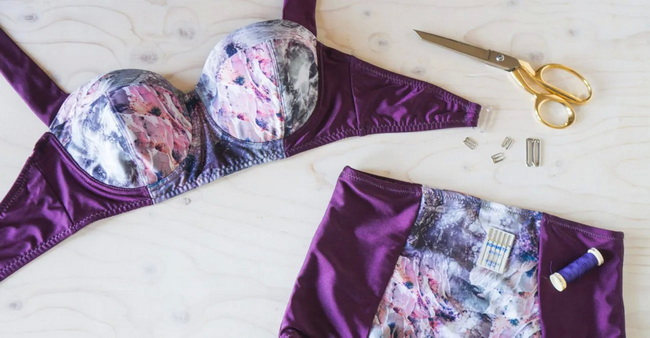
Seamless or bonded swimwear uses heat bonding or adhesive films to join panels instead of traditional thread seams, producing an ultra‑clean, second‑skin appearance. [baliswim]
Key characteristics:
- Smooth, almost invisible joins
- Reduced bulk at edges and seams
- Very modern, minimalist look aligned with luxury aesthetics [baliswim]
Pros [baliswim]
- Exceptional comfort with minimal seam lines against the skin.
- Reduces drag in water and can contour to the body for a sleek fit.
- Offers strong visual differentiation for premium collections.
Cons [ugawear]
- Requires specialized bonding machinery and strict process control.
- Higher material and production costs; not ideal for entry‑level price points.
- QC must monitor for delamination in harsh conditions.
Many brands use bonding strategically in hero pieces or limited capsules, combining it with traditional stitching in hidden structural areas to balance cost and performance. [baliswim]
High‑quality stitching ensures garments survive repeated stretching, sun exposure, chlorine, and saltwater. Seam failures often result from mismatched stitch types, incorrect tension, or cheap thread. [ugawear]
Key durability factors: [ugawear]
- Stitch density: Too few stitches reduce strength; too many perforate the fabric and reduce elasticity.
- Thread type: Polyester thread is widely recommended for swimwear due to its strength and chlorine resistance. [baliswim]
- Elastic integration: Correct stitch (e.g., three‑step zigzag or coverstitch) and proper tension prevent leg and arm openings from failing. [youtube]
Comfort is strongly linked to how seams feel against the body. Bulk, seam placement, and flatness all matter. [maggieframestore]
Examples: [youtube]
- Flatlock seams in inner thigh panels reduce rubbing during long swims.
- Smooth coverstitch hems stop edges from digging in while maintaining support.
- Seamless bonded edges create a barely‑there feel for fashion‑forward pieces.
Stitching contributes directly to perceived style and quality. Neat, symmetric seams and consistent thread tension signal care and professionalism, even to non‑technical customers. Intentional use of contrast flatlock or coverstitch can become part of your brand's signature design language. [baliswim]
Stitching choices impact both unit cost and long‑term margin. [ugawear]
Cost components: [baliswim]
- Machine types and setup time: Flatlock and bonding require higher capital investment and slower operations.
- Labor skill level: Advanced stitches demand more training, which can increase labor cost per unit.
- Material and waste: Efficient edge finishes like overlock can reduce fabric waste and rework. [baliswim]
Long‑term benefits of investing in better stitching: [ugawear]
- Fewer returns due to seam failures or discomfort.
- Stronger reviews and repeat customer rates.
- Ability to justify premium pricing and more confident quality claims.
For OEM buyers, it is usually more cost‑effective to invest slightly more in stitching upfront than to absorb returns and reputation damage later. [ugawear]
You rarely choose only one stitch; instead, you design a stitch mix aligned with your product strategy. [baliswim]
1. Define your category and customer:
- Fashion / resort lifestyle
- Mass‑market basics
- Performance / sport / triathlon
- Luxury / designer capsules
2. Clarify your top priority:
- Lowest possible unit cost
- Comfort and technical performance
- Premium finish and brand storytelling
3. Match priorities to stitch combinations: [diamondneedle]
| Product focus | Main seams | Hems and edges | Typical positioning |
|---|---|---|---|
| Entry‑level fashion | Overlock | Zigzag hems | Budget‑friendly, price‑driven markets. (baliswim) |
| Mass‑market lifestyle | Overlock | Coverstitch | Balanced quality and cost for mainstream retail. (baliswim) |
| Performance / sport | Flatlock + reinforced overlock | Coverstitch | High comfort and function; ideal for training wear. (youtube) Note: Link access failed. |
| Luxury / minimalist | Mix of bonding + hidden overlock | Bonded or fine coverstitch | Premium capsules and design‑driven pieces. (baliswim) |
4. Document decisions in tech packs:
For each seam and opening, specify stitch type, stitch length, tension guidelines, and thread type. [baliswim]
To get consistent results from your OEM partner, you should provide a clear stitching brief alongside patterns and fabrics. [ugawear]
Recommended checklist items: [maggieframestore]
- Stitch type by zone:
- Main side and crotch seams: overlock or flatlock
- Elastic application: three‑step zigzag or coverstitch
- Visible hems: coverstitch or bonding
- Stitch density:
- Define minimum stitches per centimeter in high‑stress zones like straps and waist seams. [maggieframestore]
- Thread and needle:
- Polyester or textured polyester thread suitable for chlorine and saltwater. [baliswim]
- Ballpoint or stretch needles to prevent fabric cutting. [youtube]
- Comfort‑critical zones:
- Mark inner thigh, underarm, and bust band seams where flat seams are required. [youtube]
- Testing requirements:
- Stretch‑to‑failure tests on sampled seams.
- Repeated wash and exposure tests for core continuity styles. [maggieframestore]
This level of detail helps Yongting or any professional factory set up machinery correctly from the first pilot run and maintain standards across reorders. [baliswim]
Even with a strong tech pack, practical quality checks are essential. [maggieframestore]
Key QC actions: [youtube]
- Visual seam check: Confirm straight lines, no skipped stitches, and balanced tension without puckering.
- Stretch and snap test: Stretch straps and side seams 30–50% beyond normal to check for popping sounds or visible thread breaks. [maggieframestore]
- Inside inspection: Examine inner seams for harsh, bulky finishes that could irritate skin.
- Symmetry review: Ensure left/right leg openings, straps, and neckline finishes match in length and curve. [baliswim]
Working with third‑party QC partners or internal inspectors who understand stitching reduces the risk of quality surprises at delivery. [ugawear]
If you are planning a new swimwear collection or upgrading an existing line, choosing the right OEM partner is just as important as choosing the right stitch type. A factory that truly understands stitch engineering can help you balance quality, cost, and speed to market.
At Yongting, our swimwear team can:
- Recommend optimized stitch combinations for different price points and markets, based on your brand positioning.
- Provide stitched sample swatches and prototype garments showing overlock, coverstitch, flatlock, and bonded options.
- Implement detailed stitch specs and QC routines to ensure consistency from sample to bulk production.
Call to action:
If you are a brand, wholesaler, or swimwear producer looking for a reliable OEM partner in China, contact Yongting today to discuss your stitching strategy and request complimentary stitched sample swatches for your next collection.
Contact us to get more information!
For most basic bikinis, overlock seams combined with zigzag or coverstitch hems offer a strong balance of durability, comfort, and cost for mass production. [youtube]
Flatlock is ideal for high‑movement or high‑friction zones, such as inner thighs, underarms, and sports panels, especially for training or performance swimwear where chafing must be minimized. [youtube]
Not necessarily. Seamless bonded construction delivers a sleek and comfortable feel, but high‑quality stitched swimwear using flatlock and coverstitch can match or exceed performance while offering more flexibility on cost. [baliswim]
Use chlorine‑resistant thread, specify correct stitch types by area, set minimum stitch density, and perform simple stretch tests on critical seams during sampling and pre‑shipment inspection. [ugawear]
Clearly list stitch types, stitch length/density, thread specifications, elastic application method, and any comfort‑critical zones where flat seams or bonding are mandatory. [baliswim]
Recycled polyamide and polyester blends often behave similarly to virgin fabrics, but they may require fine‑tuned tension and needle choices to avoid snagging or skipped stitches, so always test your stitch setup on the actual fabric. [baliswim]
1. Bali Swim – "Exploring Swimwear Stitch Types for Your Swimwear". [baliswim]
2. Spandex Palace – "Sewing Techniques for Swimwear Fabrics". [spandexpalace]
3. Diamond Needle Corp. – "Seams and Stitches for Sportswear and Swimwear". [diamondneedle]
4. Uga Wear – "Coverstitch vs. Overlock vs. Flatlock Stitching Explained". [youtube]
5. Google – Search Quality Rater Guidelines (E‑E‑A‑T concepts). [spandexpalace]
6. SCHMETZ – "Swimwear – Sewing Focus: Needles, Stitches, and Elasticity". [schmetz]
7. MaggieFrame – "Bathing Suit Thread: Ultimate Guide to Durable Swimwear Construction". [baliswim]
8. American Sewing Guild – "Sewing Swimwear – Tips of the Trade". [asg]
9. Fashion‑Incubator – "Flatlocking Compared to Coverstitching and Overlocking". [fashion-incubator]
10. Bali Swim – "Our Bikini & Swimsuit Factory — Your Swim Line. Easy." (video). [youtube]


